Gyeongju Cherry Blossom 2026: Best Spots and Exact Timing
Skip Seoul crowds. Gyeongju's cherry blossoms peak 5-7 days later, offering temple gardens and ancient ruins without the mob. Here's exactly where to go.
The 2026 cherry blossom season has ended. Unverified 2026 bloom dates were removed from this guide. The 2027 forecast is here: Korea Cherry Blossom Forecast 2027.
# Gyeongju Cherry Blossom 2026: Best Spots and Exact Timing
Forget the Seoul crush. While Instagram-obsessed crowds elbow each other at Yeouido Park, Gyeongju's cherry blossoms bloom against 1,300-year-old Buddhist temples and royal tombs—and they peak nearly a week later, meaning you dodge peak chaos entirely. This timing quirk isn't accidental; Gyeongju sits 200km southeast, where spring arrives slower and lasts longer. If you want actual space to breathe while photographing sakura, Gyeongju is your answer.
Why Gyeongju Cherry Blossoms Peak Later Than Seoul
Temperature matters more than calendar dates. Seoul's average spring high hits 20°C by early April; Gyeongju reaches the same by mid-April. That 5–7 day delay isn't trivial—it fundamentally changes your travel calculus.
Here's what actually happens: Seoul peaks around April 5–12, depending on year. Gyeongju's peak window runs April 10–20. This stagger exists because:
- Latitude: Gyeongju sits farther south, but elevation and coastal proximity (it's 30km from Pohang) create cooler microclimates
- Urban heat island effect: Seoul's dense concrete accelerates bloom; Gyeongju's spread-out temples and fields stay cooler longer
- Variety of trees: Gyeongju's temple gardens mix early-blooming ornamental cherries with late-blooming wild varieties
Gyeongju typically reaches full bloom several days after Seoul's peak. That offset is precious: you get genuine solitude.
The 6 Essential Cherry Blossom Spots in Gyeongju
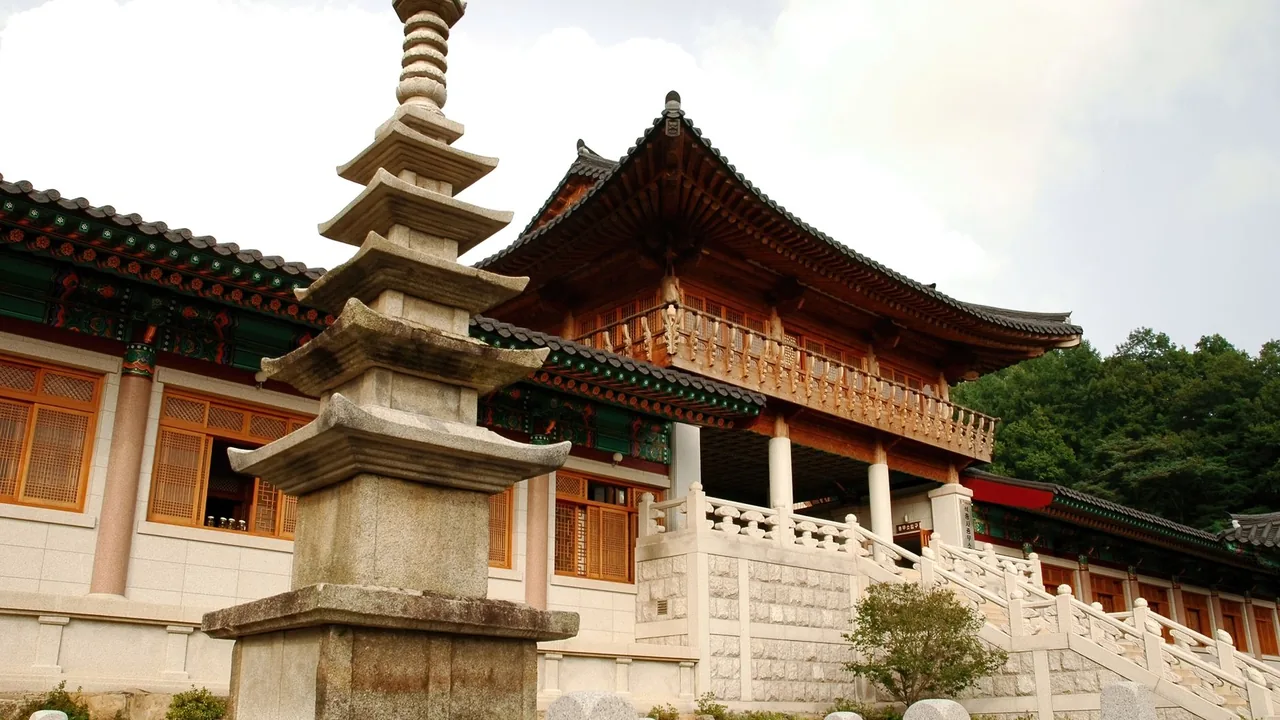
What you need to know: Bulguksa is Gyeongju's heavyweight. Built in 774, this UNESCO temple sits in forested foothills with manicured gardens. The cherry trees frame the temple's stone bridges and pagodas in ways that feel almost too perfect.
Cherry blossom specifics: Around 200+ cherry trees cluster near the Daeungbojeon Hall and along the upper pathways. The trees here are tall—old specimens, not young ornamentals—so blooms create canopies rather than walls.
Practical logistics:
- Entry fee: ₩6,000 (adult)
- Hours: 7 AM–6 PM (extend to 9 PM during peak bloom for night illumination)
- Best time: 6:30–7:30 AM or after 4 PM to avoid tour groups
- Location: Bus #10 or #11 from Gyeongju Station (35 min, ₩2,400)
- Parking: ₩3,000
Insider tip: Skip the main temple during midday. Instead, climb the forest trails behind Daeungbojeon—you'll find older, less-crowded cherry trees and views down into the valley.
What you need to know: This reconstructed royal pond (built 674 AD) is Gyeongju's most Instagrammable spot. Three islands, ancient stone relics, and a tree-lined shore create reflection gold.
Cherry blossom specifics: Roughly 150 cherry trees ring the pond. During bloom week, evening illumination (6–10 PM) runs for about a week. The blossoms light up pink against the pond's dark water—it's genuinely unlike anything else in Korea.
Practical logistics:
- Entry fee: ₩3,000 (adult)
- Hours: 9 AM–10 PM (during cherry blossom season)
- Best time: 7–8 PM (after sunset, before total dark)
- Distance from station: 3km (taxi ₩8,000 or bus #60, ₩1,200)
- Parking: ₩2,000
Insider tip: Bring a blanket. Locals sit by the pond at dusk. You're not meant to rush through here.
What you need to know: This is Korea's weirdest park—a grassy field dotted with 23 ancient royal burial mounds, some dating to 400 AD. It's historically surreal and visually hypnotic, especially with cherry blossoms overhead.
Cherry blossom specifics: About 80 cherry trees (mostly older specimens) dot the pathways between tombs. The trees aren't dense, but their isolation against the mounds creates haunting compositions. You'll have genuine quiet here—tourists don't prioritize tombs over temples.
Practical logistics:
- Entry fee: ₩3,000 (adult)
- Hours: 9 AM–10 PM (during bloom)
- Best time: 10–11 AM (morning light through blossoms)
- Distance from station: 1.5km (10-min walk or taxi ₩6,000)
- Parking: Free
Insider tip: This park is bizarrely uncrowded even during peak season. Come here when you want actual peace, not Instagram content.
What you need to know: Newly reconstructed (opened 2018), Donggung Palace was the crown prince's residence. The reconstruction feels overly modern, but the pond and garden are genuinely beautiful, and cherry trees frame the (admittedly fake) buildings masterfully.
Cherry blossom specifics: Around 120 cherry trees (mostly planted post-2018, so younger than Bulguksa's). These bloom slightly earlier. The trees frame the pond's curved shore and the wooden palace pavilions.
Practical logistics:
- Entry fee: ₩4,000 (adult)
- Hours: 9 AM–10 PM (during bloom)
- Best time: 6–7 AM (sunrise, near-empty)
- Distance from station: 2km (taxi ₩7,000 or 15-min walk)
- Parking: ₩2,000
Insider tip: Come at sunrise. You'll literally have the palace to yourself. The blossoms glow pink against the water without a soul around.
What you need to know: Locals know this one. Geumseong is a quiet residential area south of downtown where a 2km stretch of old cherry trees lines a small creek (called Taehwagang tributary). It's more "street-level Korea" than temple tourism.
Cherry blossom specifics: Roughly 200+ cherry trees, many 50+ years old, create a dense archway over a narrow pedestrian path. This isn't curated; it's organic.
Practical logistics:
- Entry fee: Free
- Best time: 10 AM–12 PM (light filters through canopy)
- Distance from station: 4km (bus #70, ₩1,200)
- Parking: Street parking (free)
Insider tip: Bring coffee and a book. Locals sit under the trees for hours. No one's rushing. Buy pastries from the nearby bakery (₩3,000–5,000) and settle in.
What you need to know: This tiny temple (founded 634 AD) gets fraction of Bulguksa's crowds. It's simpler, quieter, and the cherry trees feel more integrated into the landscape.
Cherry blossom specifics: About 40–50 cherry trees scatter through the grounds. Not dense, but each one feels placed. The stone Nine-Story Pagoda frames perfectly against pink blossoms.
Practical logistics:
- Entry fee: ₩2,500 (adult)
- Hours: 9 AM–6 PM
- Best time: 3–5 PM (golden hour, fewer groups)
- Distance from station: 5km (bus #11, ₩1,200)
- Parking: Free (small lot)
Insider tip: This temple is genuinely off the radar. Come here if you want to experience spring cherry blossoms without performing it for Instagram.
10 Essential Gyeongju Cherry Blossom Etiquette & Practical Tips
- Respect the "no-pick" rule absolutely: Picking even a single branch is illegal and deeply frowned upon. Fines can hit ₩100,000. Just don't.
- Wear layers: April in Gyeongju runs 12–18°C. Morning is cold; afternoons warm. Bring a cardigan and light jacket, not a coat.
- Book temples in advance if visiting during peak bloom: These are peak saturation days. Call ahead (Bulguksa: +82-54-748-2288) to confirm hours or ask about extended evening access.
- Avoid weekends entirely if possible: Gyeongju's smaller crowds are relative. Friday through Sunday during peak bloom still pulls thousands. Tuesday–Thursday are objectively better.
- Pack a picnic, not restaurant hopeful: Restaurants near temples jack prices 30–50% during cherry blossom season (bibimbap ₩12,000 instead of ₩8,000). Bring kimbap, fruit, and coffee from GS25 (₩3,000–4,000).
- Use buses, not taxis, for temple routes: Taxis are ₩10,000+ between sites. Gyeongju's bus network is cheap (₩1,200–2,400) and reliable. Get a rechargeable transport card at any convenience store (₩2,500 deposit).
- Download a cherry blossom tracker app: "Korea Blossom" or "Cherry Blossom" (both free) push notifications when peak bloom hits your chosen location. Don't guess—know.
- Stay overnight if possible: Day-tripping from Seoul is possible but kills the whole point. One night in Gyeongju (guesthouses ₩50,000–80,000) lets you catch sunrise and evening blooms. Way better.
- Bring a portable phone charger: You'll take 300+ photos. Your battery won't survive without backup power.
- Be genuinely quiet at temples during prayer times: 7–8 AM and 5–6 PM are formal prayer periods. Whisper, no camera flashes, no videos during these windows. Respect matters.
FAQ: Your Gyeongju Cherry Blossom Questions Answered
Q: Is April 10–20 definitely when I should visit?
A: Yes, with caveats. The 2026 season is over, and this guide does not give an observed 2026 peak date for Gyeongju. In a typical year, cold snaps can delay peak bloom by 3–4 days, or warm spells can accelerate it by the same margin. Monitor the "Korea Blossom" tracker starting March 25. If you're locked into dates, aim for the middle of that window to hedge your bets. The window is roughly 10 days of acceptable bloom (80%+ density); you'll hit it.
Q: How is Gyeongju's cherry blossom experience different from Seoul?
A: Seoul's cherry blossoms are urban spectacle—parks, crowds, vendors, Instagram stations. Gyeongju's are integrated into landscape. You're photographing trees against 1,300-year-old temples, not crowds against trees. Also, you'll actually fit on pathways. The trade-off: Gyeongju's blooms are slightly more subtle; older trees, fewer dense clusters. But that's the appeal—it's spring, not a festival.
Q: Can I see cherry blossoms and visit historical sites in one day?
A: Completely. A realistic day loop: Tumuli Park (9 AM, 1 hour) → Donggung Palace (10:30 AM, 90 min) → Lunch at local restaurant (12:30 PM, 60 min) → Bulguksa (2 PM, 2 hours) → Anapji Pond evening illumination (7 PM, 90 min). That's 8 hours of moving; doable but tight. Split across two days is smarter and lets you absorb things.
Q: What's the cheapest way to experience cherry blossoms here without paying temple fees?
A: Geumseong neighborhood creek, Tumuli Park surrounds (you can view mounds' cherry trees from outside for free), and street walks near Gyeongju's downtown (Namsanmaeul area has older residential trees). You'll miss some premium backdrops, but you'll see genuine blooms. Budget ₩0 instead of ₩15,000+ for temple entries.
Q: Should I hire a guide or go solo?
A: Solo is absolutely fine if you speak basic Korean or use Naver Maps + Google Translate. English signage at major temples is adequate. However, a guide (₩80,000–120,000 for 4 hours) adds context—you'll learn why Bulguksa's architecture frames the blooms that way, which matters. Budget it if you want depth; skip it if you want autonomy.
Q: What if I can't make April 10–20?
A: Late arrivals (April 21+) still see scattered blooms and full foliage, which is its own thing—greener, fresher, less about the spectacle. Gyeongju in late April is genuinely beautiful if you reset expectations. Earlier dates (March 25–April 9) will disappoint; blooms are sparse and inconsistent. If you must visit outside April 10–20, come for the temples and history; cherry blossoms are bonus.
Final Word: Why Gyeongju Cherry Blossoms Matter
Seoul's cherry blossoms are a moment—compressed, intense, crowded. Gyeongju's are a season. You slow down. You sit by a pond. You walk under temple trees. You're not performing spring; you're experiencing it.
Plan for the middle of the April 10–20 window, book a guesthouse, bring comfortable shoes, and let the timing work for you instead of against you. Gyeongju won't give you the viral Instagram moment (there are fewer people for a reason), but it will give you something harder to get: actual peace with spectacular blossoms.
Ask the KORLENS AI chat for Gyeongju spring blossom spot suggestions based on your interests. It is an AI assistant that replies in seconds, not a human team, and it works from Korea Tourism Organization open data. Also visiting Seoul? Seoul Local Picks covers Seoul only.
Next Step
About this guide
KORLENS is run by one person (KunStudio, a solo studio in Korea), not an editorial team. Guides are AI drafts based on public sources; some use Korea Tourism Organization TourAPI open data. KORLENS does not claim on-site visits or scheduled re-checks, so confirm hours, prices and closures with the venue before you go. Page last edited: 2026-10-04.
Plan your Korea trip with the KORLENS AI chat
Got a follow-up question after reading this? Ask the KORLENS AI chat in plain English. It is an AI assistant, not a person, and it replies in seconds with places from Korea Tourism Organization open data.
Ask the KORLENS AI chatCurious about Korean Saju? Try sajuapp.app
1,000-year-old Korean astrology, decoded by AI — available in 9 languages.
Is it worth visiting, the best time to go, crowds and real cost.
Best time to visit Gyeongbuk, month by month →7 Best Day Trips from Gyeongju (2-Hour Radius, 2026)
Skip the tourist crowds in Gyeongju's center. These 7 countryside day trips within 2 hours reveal authentic Korea—from coastal cliffs to mountain temples and ar
Gyeongju 3-Day Itinerary for First-Time Visitors (2026)
Skip the Seoul crowds. Gyeongju's ancient temples, royal tombs, and vibrant city center reveal Korea's true cultural soul in three days.