KORLENS

Korea Travel Niche · 2026 Trend

Mountain Vibe — Korea's Trail-to-Cafe Hiking Routes, Off-Season Climbs

Korea is 70% mountainous, with 22 national parks reachable by public transit from Seoul or Busan within three hours, and KORLENS maps the trail-to-cafe routes that define 2026's 'Mountain Vibe' travel trend.

Korean mountain travel is no longer just summit-and-down. The 2026 'Mountain Vibe' trend pairs short trails with destination cafes, hot-spring spas, and one-night hanok stays — a slow-hike model with measurable demand growth on Naver Map searches.

For hikers, day-trip travelers, and slow-travel groups who want mountain trips structured around trails plus cafes, plus the occasional hot-spring overnight — without summit obsession.

Mountain VibeHikingNational parksBukhansanKorea outdoors

Four ways travelers approach this niche

Pick the lens that matches where you are in trip planning.

Inspiration

Why Korean mountains are uniquely accessible

Korea is one of the only OECD countries where you can summit a national-park mountain by subway. Bukhansan in Seoul, Geumjeongsan in Busan, and Geumosan in Daegu are all reachable on the urban transit network. The trail-to-cafe culture (산행 + 카페) means most popular trailheads have neighborhood cafes within a 5-minute walk down — turning a 4-hour hike into a half-day social outing.

Comparison

Korean mountains vs. Japanese mountains

Japan wins on dramatic alpine geology (Northern Alps, Hokkaido). Korea wins on accessibility (subway-to-summit, 22 national parks within KTX range), cost (national park admission is free or under ₩5,000 vs ¥1,000–¥3,000 in Japan), and the trail-cafe pairing culture which is uniquely Korean. Japan's Kumano Kodo wins on multi-day pilgrimage routes — Korea has nothing equivalent.

Book Now

Book guided hikes or permits

Seoraksan Daecheongbong summit and Jirisan Cheonwangbong traverse both require advance permits — apply through the Korea National Park Reservation Service (English available). Day-hike Bukhansan, Hallasan Seongpanak, and Sobaeksan need no permit. Klook and KKday list English-guided Bukhansan and Hallasan day-hikes from ₩90,000–₩140,000 per person.

Near You

Trail within 1 hour of where you are

From Seoul — Bukhansan Bukhansanseong Trailhead is 35 minutes by subway (Line 3 Gupabal). From Busan — Geumjeongsan is 25 minutes by Line 1 + Beomeosa bus. From Jeju — Hallasan Seongpanak Trailhead is 20 minutes by car or 40 minutes by bus 281. All three are reachable same-day with no booking.

Top 5 hotspots in Korea

  1. 1

    Bukhansan (Seoul)

    Only national park inside a capital city; Baekundae summit 4-hour round trip.

  2. 2

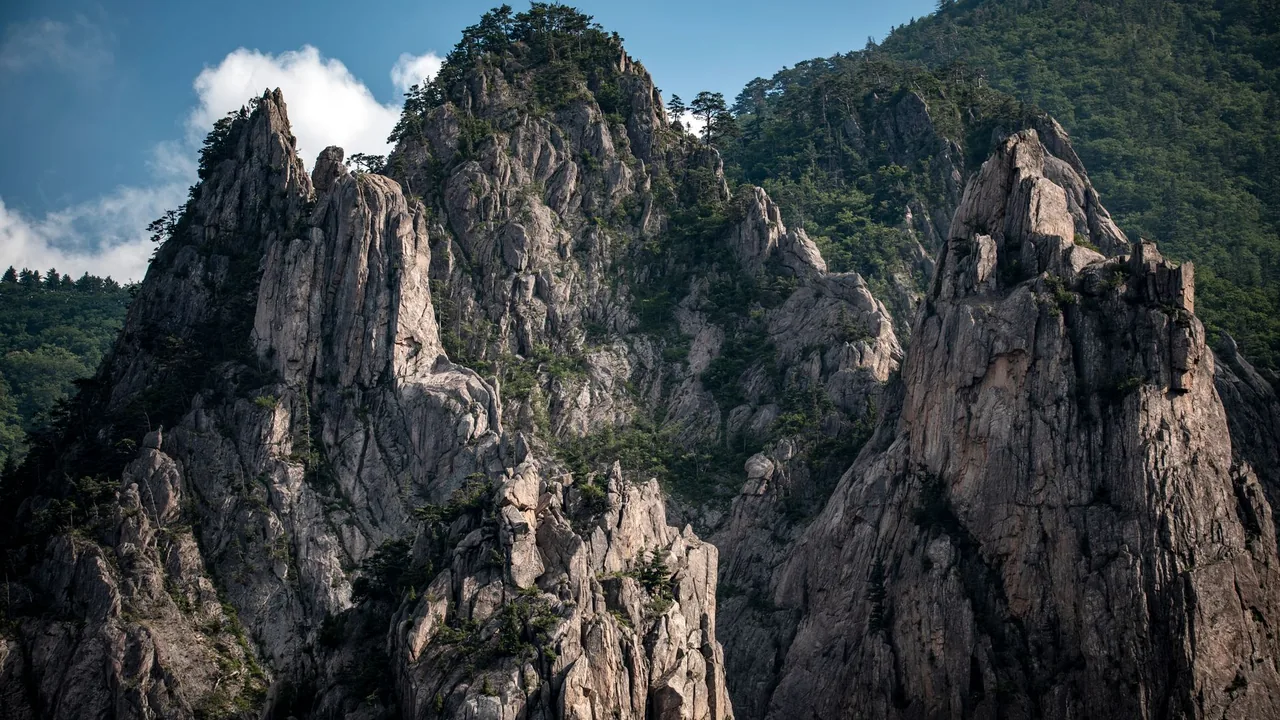
    Seoraksan (Gangwon)

    Tier-1 autumn foliage; Daecheongbong summit requires permit.

  3. 3

    Jirisan (Jeonnam / Gyeongnam border)

    Korea's largest national park; 3-day Cheonwangbong traverse.

  4. 4

    Hallasan (Jeju)

    Korea's highest peak (1,947m); Seongpanak trail is the easiest summit route.

  5. 5

    Sobaeksan (Chungbuk / Gyeongbuk)

    Spring royal-azalea bloom in late May; less crowded than Seoraksan.

Local insider tip

What English-language guides miss

Korean trail signs use a difficulty color code — green/blue/red — that is calibrated for Korean fitness norms. A 'green' trail in Korea is usually equivalent to a U.S. 'blue.' A Korean 'red' (advanced) is genuinely demanding. Start with one level below your home-country comfort zone, especially on Seoraksan and Jirisan where elevation gain is steep and stairs are abundant. This calibration is rarely mentioned in English-language trail descriptions.

Frequently asked questions

When is the best season to hike in Korea?

Mid-October to early November (autumn foliage at peak — Seoraksan is world-famous) and late April to early June (spring wildflowers, comfortable temperatures). Avoid July (monsoon — slippery trails, leeches in Jirisan) and January to February (frozen trails, ice-axe required on Hallasan).

Do I need permits for Korean national parks?

Day hikes — no permit. Summit hikes on Seoraksan Daecheongbong, Jirisan Cheonwangbong, and Hallasan summit (winter season) require advance reservation through the Korea National Park Service. Apply 30 days ahead in peak autumn season.

Is hiking in Korea safe for solo travelers?

Yes — trails are well-marked, well-trafficked, and have ranger checkpoints on major peaks. Carry a phone, download the KNPS Park Service app (English available, offline map mode), and start summit hikes before 9 a.m. to allow descent before sunset.

Build a custom Korea trip around this niche

KORLENS routes Korea itineraries by interest — eco, solo, vegan, history, mart shopping, bookstore pilgrimage, or trail-cafe. Chat with a local-trained guide to plan a 3 to 7 day trip around the picks above.

Chat with KORLENS