Gwangju Shopping Guide 2026: Best Districts and Markets
Skip the tourist traps. This insider guide maps Gwangju's actual shopping districts by what you need—from streetwear to ceramics—with real prices and etiquette
# Gwangju Shopping Guide 2026: Best Districts and Markets
Opening: The Real Gwangju Shopping Truth
Gwangju doesn't have the glitzy Myeongdong energy of Seoul, and that's exactly why its shopping scene works. You won't elbow through crowds of tour groups here—instead, you'll find locals actually buying things they need, prices that don't inflate for foreigners, and neighborhoods where merchants remember your face after two visits. The city's shopping culture is honest: street vendors sell what moves, traditional markets run like they have for decades, and department stores serve the people who live here. If you approach Gwangju shopping with Seoul expectations, you'll miss what makes it genuinely useful.
Match Your Shopping Need to the Right Gwangju District
Gwangju's layout doesn't revolve around a single shopping mecca. Instead, each district (gu) specializes. Dong-gu is where you hunt fashion and streetwear. Seo-gu holds traditional markets and bulk goods. Nam-gu is younger, trendier, student-focused. Buk-gu has family retail. Once you know what you're buying—not just where you want to wander—you'll save time and money.
6 Specific Shopping Neighborhoods & What You Actually Find There
What to expect: Multi-story fashion buildings, Korean streetwear brands, shoe shops, and vintage.
Why locals go here: Geumnam-ro is Gwangju's unofficial fashion street. You'll find buildings like Geumnam Park (금남파크) and neighboring structures packed with independent boutiques, franchise streetwear labels, and shoe merchants. Prices typically run 30,000–80,000 KRW for tops, 60,000–150,000 KRW for pants. Vintage shops cluster on side alleys; a decent vintage jacket runs 40,000–70,000 KRW. The street stays busy on weekends but manageable on weekday afternoons. Walk the full length—merchandise quality varies block to block.
Nearest subway: Line 1, Geumnam-ro Station (금남로역). Exit 3 lands you on the main strip.
What to expect: Narrow pedestrian street, clothing shops, bags, belts, jewelry, cheap & cheerful energy.
Why locals go here: This is where Gwangju ajummas (older Korean women) shop for everyday clothes and accessories at rock-bottom prices. T-shirts run 10,000–20,000 KRW. Bags and belts 15,000–40,000 KRW. The street is tightly packed—expect shoulder-to-shoulder on Saturday afternoons. Merchandise refreshes frequently. Haggling isn't standard, but asking "조금 깎아주시겠어요?" (jom kkakka jusi-gesseo-yo – Can you knock off a bit?) sometimes works. Not for luxury; best for quantity and practicality.
Nearest subway: Line 1, Jinhyangro Station (진향로역). Follow signage—the street runs perpendicular to the main road.
What to expect: Wholesale fabric warehouses, textile manufacturers, apparel production shops, custom tailoring.
Why locals go here: If you need bulk fabric, custom clothing made, or want to see where Korean apparel actually gets manufactured, the Textile Center in Buk-gu is the real deal. Fabric runs 8,000–25,000 KRW per meter depending on quality. Custom suits take 2–3 weeks and cost 300,000–600,000 KRW (roughly half Seoul prices). This is wholesale territory—they prefer orders over single items, but won't turn you away. Most staff speak zero English; bring a translator or photos.
Nearest subway: Line 1, Gwangsan Station. Taxi from there (5,000 KRW) or ask your hotel—it's slightly outside central zones.
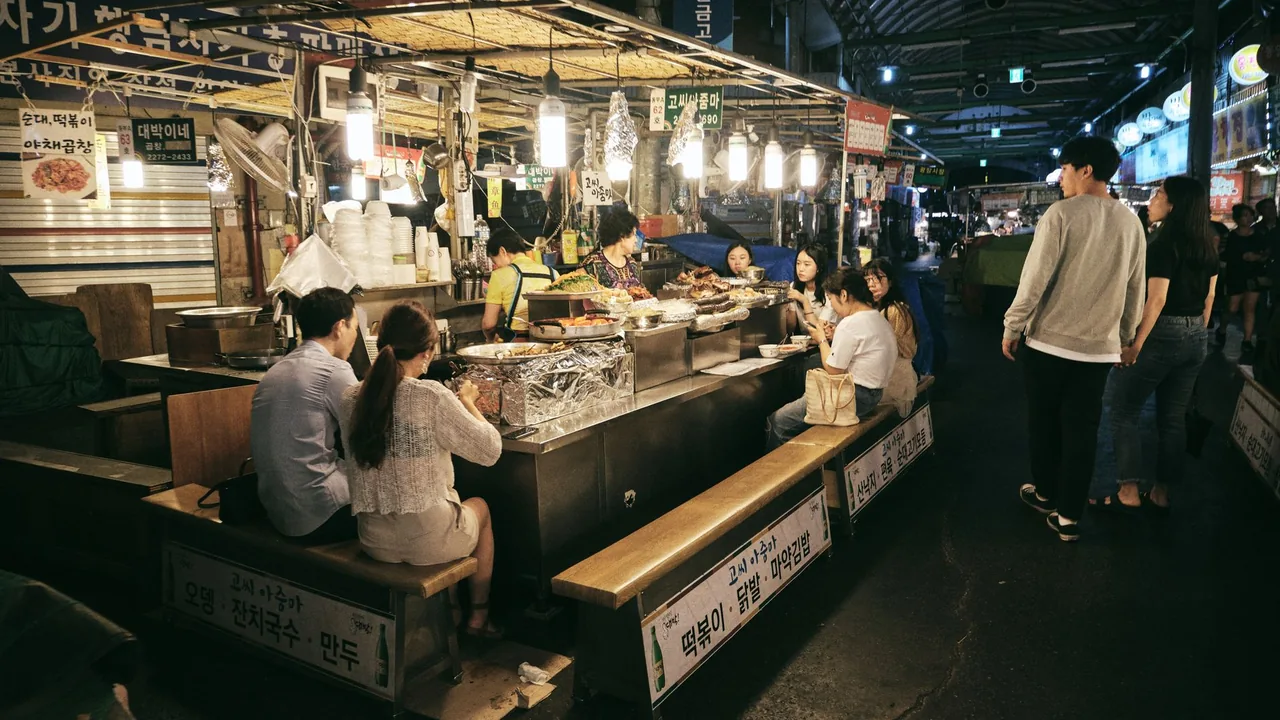
What to expect: Wet market chaos, produce, kimchi, pickles, dry goods, street food, zero tourism infrastructure.
Why locals go here: This is a neighborhood market where Gwangju residents buy groceries. You won't find souvenir shops. You will find kimchi at 10,000–15,000 KRW per container, dried anchovies at 12,000–18,000 KRW per 500g, and fresh produce at prices locals actually pay. Arrive before 2 PM; many vendors close early. Bring a reusable bag—plastic bags are sold separately. Cash only at most stalls. Eat tteokbokki or sundae (blood sausage) from street vendors for 3,000–5,000 KRW. This market has soul; take your time.
Nearest subway: Line 1, Chungcheong-ro Station. Walk east about 10 minutes, or ask a local—everyone knows Yangnim.
What to expect: Studio-shops, individual potters, finished ceramics, custom orders, museum-quality pieces.
Why locals go here: Gwangju has a serious ceramics heritage. The pottery district (centered around Punggyeong-dong in Nam-gu) is where artisans actually work and sell. Bowls start at 25,000 KRW; plates 30,000–80,000 KRW; and high-end artist pieces 200,000+ KRW. You can watch potters at work, commission custom pieces (takes 4–8 weeks), and often get direct-from-maker pricing. This isn't a tourist circuit—it's where people who care about ceramics go. Staff may speak limited English; pointing and nodding works fine.
Getting there: Take a taxi to Punggyeong-dong. It's not directly on a subway line, but taxis are cheap (7,000–10,000 KRW from downtown). Or ask your hotel to call ahead to a specific studio.
What to expect: Temporary markets, seasonal sales, clothing outlets, factory seconds, event-based pricing.
Why locals go here: When brands need to clear inventory fast, they set up here. Timing is everything—check Gwangju's event calendar or ask your hotel. During seasonal sales (late January, August), you'll find brand-name clothing at 30–50% off. Prices vary wildly depending on what's clearing. Not permanent; call ahead or check local Korean news sites for dates.
Nearest subway: Line 2, Convention Center Station (컨벤션센터역).
8 Practical Shopping Etiquette & Tips for Gwangju Markets
- Bring cash. Many traditional markets and smaller shops don't accept cards. ATMs are everywhere, but withdrawing 200,000–300,000 KRW in advance saves time. Most convenience stores have ATMs.
- Arrive early for the best selection. Markets peak 10 AM–12 PM. If you arrive after 3 PM, many vendors have sold out or closed. Traditional markets especially wind down by evening.
- Don't touch merchandise without asking. In traditional markets and some boutiques, vendors prefer you point and ask them to show items. Respectfully say "봐도 돼요?" (bwado dwae-yo? – Can I look?) when approaching a display.
- No haggling in chain stores or department stores—period. In traditional markets, a gentle "깎아주시겠어요?" (Can you reduce the price?) is acceptable for bulk purchases or cash transactions, but don't expect it. Vendors will say no without offense.
- Bring reusable bags or expect to pay. Most markets charge 500–2,000 KRW for plastic bags. Vendors appreciate customers who bring their own.
- Respect queues at food stalls. If you're buying tteokbokki or street food, line up properly. No cutting, even if the line is informal.
- Learn three Korean phrases: "이거 얼마예요?" (how much?), "너무 비싸요" (too expensive), "괜찮아요" (never mind/I'll pass). Politeness opens doors; vendors will sometimes offer discounts to respectful foreigners.
- Confirm prices before paying. Point to items and watch the vendor ring them up. Miscommunication is rare, but confirming prevents awkward moments.
- Visit on weekdays if you hate crowds. Gwangju shopping is manageable compared to Seoul, but Tuesday–Thursday afternoons are genuinely peaceful.
- Ask locals for current recommendations. Shopping dynamics shift. Hotel staff and restaurant workers know what's open, popular, and worth your time better than any guide from 2025.
FAQ: Gwangju Shopping Questions Answered
Q: Is shopping in Gwangju cheaper than Seoul?
Yes, noticeably. Department stores and chain stores price similarly across Korea, but traditional markets and independent boutiques in Gwangju operate on lower overhead. You'll see 15–25% lower prices for clothing and street fashion compared to Seoul's Myeongdong or Gangnam. Bulk goods and fresh items are substantially cheaper. The trade-off: less selection and fewer English-speaking staff.
Q: What's the best time of year to shop in Gwangju?
Season-change sales (late January and August) offer genuine discounts. Spring (April–May) and fall (September–October) bring fresh inventory without crowds. Avoid Lunar New Year (late January/early February) and Chuseok (September/October) holidays—many shops close for 3–5 days, and remaining ones get slammed. If you're looking for seasonal items, arrive early in the season.
Q: Can I return or exchange items?
Chain stores have standard return policies (usually 7 days, with receipt). Traditional market vendors rarely accept returns—buy from established vendors if the product matters. Always inspect items before leaving the stall. If a major defect appears, returning within 24 hours sometimes works, but don't count on it. Keep receipts.
Q: Are there English-speaking shopping guides or tours?
Not really. Gwangju isn't marketed to English-speaking tourists, so English-language shopping tours don't exist. Your hotel concierge can call ahead to specific shops and request English-speaking staff, but don't expect it. Using Google Translate on your phone works for text-based communication; for negotiations, simple hand gestures and numbers suffice.
Q: What should I buy in Gwangju that I won't find elsewhere?
Ceramics and pottery are genuinely special—artisan-quality pieces at fair prices. Gwangju produces mid-range Korean fashion brands that haven't reached international markets; if you follow Korean fashion, you'll discover labels unavailable outside Korea. Local food products (kimchi, dried goods, gochugaru) are high-quality and cheaper than in Seoul. Textile services—custom tailoring or bulk fabric orders—are exceptional value.
Q: Are there shopping malls with Western brands?
Yes. Gwangju's Hyundai Department Store and Lotte Department Store carry international labels, but prices match Seoul. If your goal is Nike, Zara, or Uniqlo, you'll find them, but shopping locally is more interesting and usually cheaper. For that kind of familiar retail, you're better off in Seoul.
Closing: Your Next Move
Gwangju's shopping scene rewards specificity. You won't stumble onto the best experiences—you'll find them by knowing what you want and where locals actually buy it. Start with Geumnam-ro if you want fashion, hit Yangnim Market if you need authentic local goods, and venture to the pottery district if you have time and curiosity.
Ask the KORLENS AI chat for Gwangju shopping suggestions based on your interests. It is an AI assistant that replies in seconds, not a human team, and it works from Korea Tourism Organization open data. Also visiting Seoul? Seoul Local Picks covers Seoul only.
Happy hunting.
Next Step
About this guide
KORLENS is run by one person (KunStudio, a solo studio in Korea), not an editorial team. Guides are AI drafts based on public sources; some use Korea Tourism Organization TourAPI open data. KORLENS does not claim on-site visits or scheduled re-checks, so confirm hours, prices and closures with the venue before you go. Page last edited: 2026-06-09.
Plan your Korea trip with the KORLENS AI chat
Got a follow-up question after reading this? Ask the KORLENS AI chat in plain English. It is an AI assistant, not a person, and it replies in seconds with places from Korea Tourism Organization open data.
Ask the KORLENS AI chatTry the Korean skincare products mentioned in this guide
Olive Young Global — free international shipping over $60, ships to 150+ countries.
Shop Olive Young GlobalCurious about Korean Saju? Try sajuapp.app
1,000-year-old Korean astrology, decoded by AI — available in 9 languages.
Is it worth visiting, the best time to go, crowds and real cost.
Gwangju Cultural Landmarks in Half a Day (2026 Local Guide)
Skip the tourist traps. Hit Gwangju's real cultural landmarks in 4 hours with a local-tested itinerary that actually fits your schedule.
12 Gwangju Photography Spots for Instagram (2026 Local Picks)
Skip the tourist traps. Discover 12 authentic gwangju photography spots where locals actually shoot. Real prices, real light, real stories.