Daegu on a Budget: How to Travel for KRW 100,000/Day in 2026
Skip Seoul. Daegu offers authentic Korea at half the price—street food, temples, and hot springs for under KRW 100,000 daily. Here's the local insider's breakdo
# Daegu on a Budget: How to Travel for KRW 100,000/Day in 2026
Opening
Daegu isn't on your Korea bucket list—and that's exactly why you should go. While Seoul's Gangnam district bleeds your wallet and Busan fills up with cruise ship tourists, Daegu sits quietly in the southeast, offering street food that rivals Seoul's, temples that haven't been Instagram-sanitized, and accommodations that won't require a second mortgage. The locals here still haggle at markets, eat at family-run restaurants where no English menu exists, and genuinely seem pleased when foreigners show up. You can absolutely live here for KRW 100,000 per day (roughly USD 75 in 2026)—and we've done the math to prove it.
Where the Savings Actually Are in Daegu — By Category
Forget Seoul's capsule hotels charging KRW 50,000+. Daegu's guesthouses and hostels cluster around Banwoldang and near Dongdaegu Station, with clean double rooms at KRW 30,000–35,000. The trade-off? Shared bathrooms and zero frills. But here's the local secret: negotiating weekly rates drops this to KRW 150,000 (KRW 21,400/night) if you stay 7+ nights. Airbnb studio rooms go for KRW 28,000–32,000 if you book off-peak. Your mission: skip the "Instagram hostel" trap entirely.
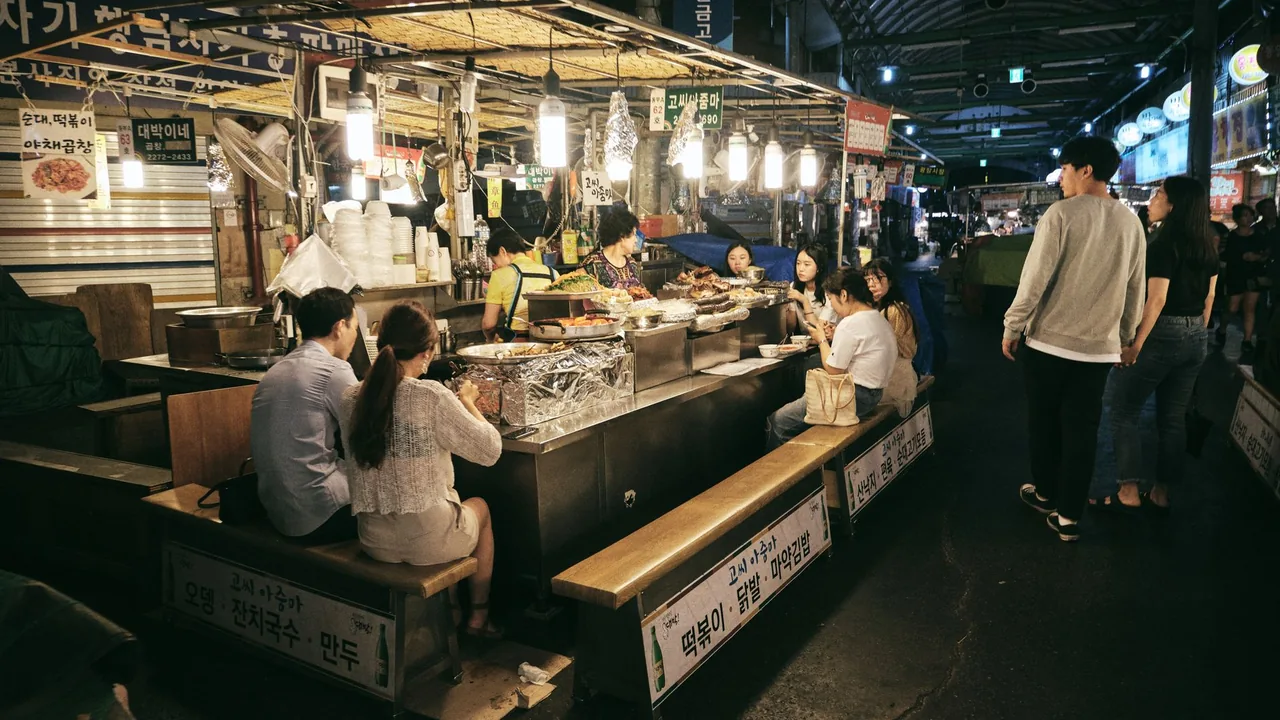
This is where Daegu crushes every other Korean city. A bowl of kalguksu (knife-cut noodles) runs KRW 5,500–7,000. Jjim-dak (braised chicken) restaurants charge KRW 10,000–12,000 per portion. Street vendors at the Daegu street food market serve tteokbokki for KRW 3,000, hotteok (sweet pancakes) for KRW 2,500, and gimbap rolls for KRW 4,000. You can eat three solid meals and grab snacks for under KRW 30,000. The key: eat where locals eat, skip tourist-facing establishments, and embrace the ajumma-run pojangmacha (tent restaurants).
Daegu's subway is cheaper than Seoul's. A single trip costs KRW 1,250–2,050 depending on distance. Buy a rechargeable card (no deposit needed anymore) and load KRW 10,000 for 4–5 days of city movement. Buses are even cheaper at KRW 1,250 base fare. Day passes don't exist, but with smart routing, you'll never spend more than KRW 15,000 on transport unless you're taking taxis (avoid these entirely).
Here's the Daegu advantage: most major temples and parks charge nothing or a minimal donation. Yangnyeongsi Market (Korean medicine market) is free to wander. Seomun Market's photogenic alleyways cost zero. Paid attractions like Daegu National Museum (KRW 5,000) and Palgongsan National Park entrance (KRW 5,000) won't break the bank. Many of Daegu's best experiences—hiking, temple exploration, market wandering—are entirely free.
5–7 Specific Spots/Neighborhoods with Real KRW Prices
Location: Near Jungno Station, concentrated around Jungang-ro What to Eat & Real Prices:
- Tteokbokki (spicy rice cakes): KRW 3,000–4,500
- Gyeran-mari (egg rolls): KRW 2,000 per piece
- Hotteok (sweet red bean pancake): KRW 2,500–3,000
- Street corn: KRW 4,000
- Sundae (blood sausage): KRW 3,000–4,000
Pro tip: Hit the market after 5 PM when locals flood in. Vendors are relaxed, portions are generous, and you'll eat dinner for KRW 12,000–15,000 total.
Budget Accommodation: KRW 28,000–35,000/night (dorm beds KRW 18,000–22,000) Cheap Eats:
- Kalguksu joints: KRW 6,500–8,000
- Convenience store gimbap: KRW 3,500–4,500
- Ramen at pojangmacha: KRW 5,000–6,500
Why it works: High foreigner density means English signage and negotiable rates. Guesthouses offer "monthly" discounts even for week-long stays.
Cost to Enter: Free Average Transaction: KRW 3,000–8,000 per item
This 100+ year old market is pure sensory overload—textiles, dried goods, street food, and zero tourist markup. Grab a kimbap set (KRW 5,000), watch vendors haggle in rapid-fire Daegu dialect, and explore without spending much. The photo ops alone justify the trip.
Cost to Enter: Free Avg. Snack Cost: KRW 2,000–5,000
Walk the ginseng stalls, watch herbalists at work, and grab a medicinal snack like dried date candy (KRW 3,000). This neighborhood feels like stepping back 50 years—completely authentic, completely free to explore.
Entrance Fee: KRW 5,000 (parking KRW 3,000 if driving; take bus to avoid parking) Food Cost: Bring your own or eat at base: temple restaurant meals KRW 8,000–10,000
One of Korea's most underrated hikes. Summer wildflower hiking and temple exploration for minimal cost. Bus from downtown: KRW 2,500.
Accommodation: KRW 25,000–32,000/night Dining: Train station gimbap (KRW 4,000), ramyeon (KRW 4,500–5,500)
If you're arriving by intercity bus or KTX, stay here the first night to save transport hassle. It's cheaper than Banwoldang and still walkable.
Transport from Daegu: KRW 3,500–4,500 return bus fare Attractions: Free temples, hiking, traditional Korean village Food: Farm-to-table lunch at local restaurants: KRW 8,000–12,000
Most foreigners never venture here. You'll find untouched Korean village life, zero tourist markup, and some of the best temple food in the region.
Etiquette & Practical Tips (Numbered List)
- Learn 10 Korean phrases. "Eolmayeyo?" (How much?), "Gajido doendae?" (Can I take it?), "Gamsa hamnida" (Thank you). Vendors reward effort with smaller prices and larger portions.
- Carry cash exclusively. Many street vendors and small restaurants don't accept cards. ATMs are everywhere, but some guesthouses charge KRW 1,000–2,000 for card payments.
- Shop at GS25 or CU convenience stores for breakfast. A kimbap, banana milk, and coffee costs KRW 8,500 total—cheaper and faster than sit-down restaurants.
- Never pay the first asking price at markets. Light haggling (5–10% off) is expected and respected. Say "jocho" (reduce) with a smile.
- Eat lunch, not dinner. Most restaurants offer "set lunch" (lunch course) 5–10% cheaper than dinner prices. Lunch is typically 11 AM–2 PM.
- Use the subway card for all transport. It works on buses too and saves you KRW 100–150 per trip compared to cash single tickets.
- Visit temples on weekdays before noon. Fewer tourists, more likely to get invited to temple meals (free or KRW 5,000 donation), and better photos.
- Avoid Friday and Saturday nights for accommodation. Prices spike 15–20%. Book Sunday–Thursday for best rates.
- Don't order coffee at restaurants—buy it at convenience stores. A KRW 15,000 café americano costs KRW 3,000 at GS25.
- Befriend hostel staff or other backpackers. Group dinners at local spots yield better prices, and locals love teaching foreigners Daegu secrets. Communal eating = 10–15% discount often.
FAQ
Absolutely. Breakfast at a convenience store (KRW 8,500), lunch at a kalguksu joint (KRW 7,500), and dinner at the street food market or pojangmacha (KRW 12,000–15,000) totals under KRW 33,000. Add snacks and coffee, you're at KRW 38,000. The catch: you're eating adventurously, not at Western-style cafés, and breakfast won't be elaborate. But the quality is exceptional—Daegu's street food rivals Michelin-standard restaurant food in Seoul, at 1/4 the price.
Hostel dorm beds in Banwoldang run KRW 18,000–22,000/night. Guesthouses (guesthouse.co.kr, Korean language site, but bookable) go KRW 25,000–28,000 for private rooms. The absolute floor is KRW 15,000 for a very basic room in Dongdaegu, but cleanliness varies. For stable KRW 30,000 rooms with reliable standards, book Airbnb or Booking.com targeting "guesthouse" properties. Weekly rates drop everything 15–20%.
Daegu is statistically one of Korea's safest cities. Street crime is nearly nonexistent. The main annoyance: aggressive drunk men late at night (midnight+), but this affects women more than men. Stick to main streets after dark, avoid isolated alleys, and you're fine. Use common sense—don't flash expensive gear, don't leave drinks unattended. The neighborhoods we've listed (Banwoldang, Seomun, Yangnyeongsi) are frequented by locals and entirely safe day and evening.
Both are identical functionally. Buy a rechargeable card at any convenience store (no deposit, unlike older versions). Load KRW 10,000–20,000 on it. Works on subway, buses, and many convenience stores. They're free to obtain and save you KRW 100–150 per ride vs. single tickets. Keep it the entire trip—no expiration.
June, September, and November are optimal. Summer (July–August) is brutally hot and humid but cheap on accommodation. Winter (December–February) sees low tourism and lower guesthouse rates (KRW 22,000–28,000), but heating bills raise restaurant prices slightly. Fall (late September–early November) offers perfect weather and moderate prices. Avoid Chuseok (Korean Thanksgiving, varies yearly) and Lunar New Year when prices spike 30–50% and many small restaurants close.
Yes, but tightly. A day trip to Gunwi-eup (KRW 9,000 round-trip transport, KRW 12,000 meal) reduces your remaining daily budget to KRW 79,000. You'd need to cut accommodation to KRW 25,000, leaving KRW 54,000 for city food. It's doable but requires meal planning. Better strategy: use Daegu as your base (ultra-cheap), take 1–2 day trips midweek when transport is cheapest, and rely on in-city exploration for most days.
Closing
Daegu isn't the Korea you'll find on Instagram. There's no K-pop, no K-beauty flagship stores, no English-speaking craft cocktail bars. What you will find is the Korea that Koreans actually live—authentic street food markets that haven't been sanitized for foreigners, temples where monks still invite strangers to dinner, and a city that still has room for serendipity.
KRW 100,000 per day isn't a sacrifice in Daegu; it's a feature. You'll eat better, explore deeper, and meet more locals than you would in Seoul spending triple. Start planning your trip, and when you get here, skip the tourist traps entirely.
Ask the KORLENS AI chat for Daegu place suggestions for a tight budget based on your interests. It is an AI assistant that replies in seconds, not a human team, and it works from Korea Tourism Organization open data. Also visiting Seoul? Seoul Local Picks covers Seoul only.
Happy travels—and don't forget to learn that haggling phrase.
Next Step
About this guide
KORLENS is run by one person (KunStudio, a solo studio in Korea), not an editorial team. Guides are AI drafts based on public sources; some use Korea Tourism Organization TourAPI open data. KORLENS does not claim on-site visits or scheduled re-checks, so confirm hours, prices and closures with the venue before you go. Page last edited: 2026-05-31.
Plan your Korea trip with the KORLENS AI chat
Got a follow-up question after reading this? Ask the KORLENS AI chat in plain English. It is an AI assistant, not a person, and it replies in seconds with places from Korea Tourism Organization open data.
Ask the KORLENS AI chatCurious about Korean Saju? Try sajuapp.app
1,000-year-old Korean astrology, decoded by AI — available in 9 languages.
Is it worth visiting, the best time to go, crowds and real cost.
Best Neighborhoods to Stay in Daegu for Foreigners (2026 Guide)
Skip the tourist trap hotels. We've mapped 7 neighborhoods in Daegu where you'll actually live like a local—with real prices, subway access, and the street-leve
Daegu Transport Guide for Foreigners (2026): Subway, Bus, Taxi
Master Daegu transport like a local. Subway, bus, taxi costs & etiquette—everything you need to navigate Korea's fourth-largest city without confusion.