Ulsan Night Markets and Late-Night Eats (2026 Guide)
Skip Seoul's crowded night markets. Ulsan's late-night food stalls offer authentic Korean street food, fewer tourists, and better value. Your insider's guide to
# Ulsan Night Markets and Late-Night Eats (2026 Guide)
Opening: Why Ulsan's Night Food Scene Flies Under the Radar
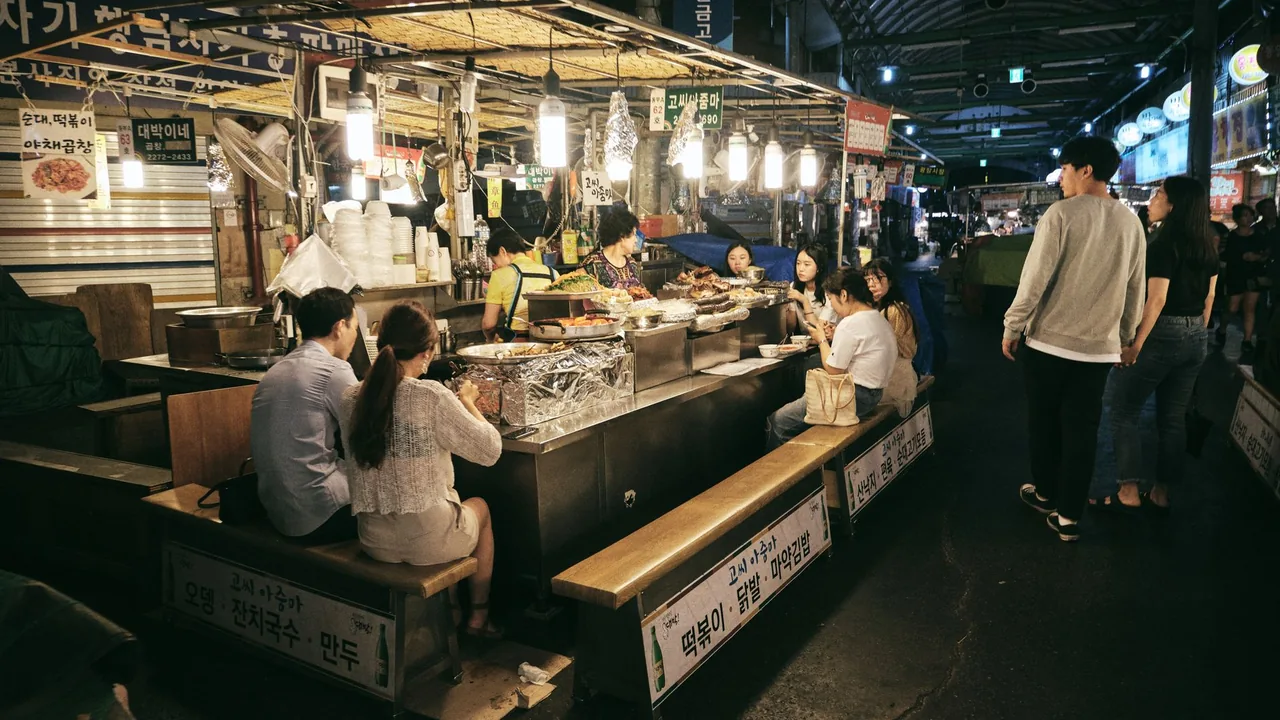
While tourists queue for hours at Seoul's Myeongdong Street, Ulsan's ulsan night market food stalls operate without the Instagram influencer circus—which means you actually get to eat what you came for. This industrial city on Korea's southeast coast has quietly developed one of the country's most underrated late-night food cultures, where Korean office workers, dock laborers, and students keep the stalls alive until 2 or 3 AM. You won't find food bloggers or tour groups elbowing through Ulsan's markets, but you will find better tteokbokki, fresher gimbap, and prices that won't make you wince. Here's what you need to know to eat like a local.
Why Ulsan's Late-Night Food Scene Matters to Travelers
Ulsan isn't a tourist destination in the traditional sense. It's a working city built on shipbuilding, petrochemicals, and fishing—which means the food culture exists for locals first, tourists second. That's actually the appeal. When you eat at an ulsan night market food stall at 11 PM, you're eating what someone who lives here eats after a 12-hour shift, not what a restaurant designed for foreigners thinks you want.
The late-night food scene also reveals a different side of Korean food culture. While tourist-focused restaurants are polishing their English menus and Instagram aesthetics, Ulsan's night markets are still doing basics: perfecting a recipe for tteokbokki that's been refined over 20 years, keeping portions generous, and charging prices that feel fair. You get texture, heat, and authenticity without paying Seoul-adjusted markup.
Second, timing matters. Ulsan's night markets and stalls peak between 9 PM and 1 AM on weekdays, and until 2-3 AM on Fridays and Saturdays. If you're arriving on an evening flight or have jet lag that has you awake at midnight, you're not eating vending machine kimbap from a convenience store—you're getting a proper meal from someone who's been doing this for decades.
Finally, navigating Ulsan's night food scene forces you to interact with the city on its own terms. No English signage. No laminated menus. Just pointing, nodding, and trusting your instincts—which is how real travel happens.
5-7 Specific Spots and Neighborhoods
Location: Nam-gu, Central Ulsan (near Bangoge Station) Peak hours: 9 PM–1 AM
Nam-gu Market is Ulsan's closest equivalent to a traditional pojangmacha (food tent) cluster. It's a covered market with 30+ stalls selling everything from tteokbokki and odeng (fish cake skewers) to soups and grilled items. The market operates during the day but truly wakes up after 8 PM when office workers swing by. Prices are brutally fair: a large tteokbokki (₩4,500–5,500), ramyeon (₩3,500), and a full seafood hotpot for two (₩18,000–22,000). Start with Kkotbbae Tteokbokki (꽃배 떡볶이), a stall that's been there since 2004. Their signature is tteokbokki with a slightly sweet gochujang sauce and visible anchovy broth depth.
Location: Jung-gu, near Ulsan Station Peak hours: 10 PM–2 AM
This is where you'll find fewer tourists and more university students, night shift workers, and young professionals. The alley has about 15 stalls packed tightly, selling tteokbokki, gimbap, Korean fried chicken (chimaek), and soups. The energy is different here—louder, more chaotic, more real. Expect a tteokbokki-and-ramyeon combo for ₩8,000–9,000, or a full fried chicken meal with beer for ₩15,000–18,000. Wonjo Gimbap (원조 김밥) has a loyal following for their sesame-heavy, tightly-rolled gimbap (₩3,500 per roll) and homemade pickled radish.
Location: East Ulsan (Dong-gu) Peak hours: 8 PM–12:30 AM (closes earlier than other zones)
Dongbu is smaller and more curated than Nam-gu. About 12 stalls, but the owners are picky about quality. You'll see higher-grade ingredients, slightly longer prep times, and a clientele that includes older locals and families, not just students grabbing quick bites. Try Jjim & Bokkeum House for their spicy squid bokkeum (₩12,000) and vegetable tempura (₩5,500). A full meal runs ₩15,000–20,000, but you notice the difference in ingredient freshness.
Location: Nam-gu, near Samsan Rotary Peak hours: 10 PM–1 AM
This alley caters heavily to people working at Ulsan's port and shipyards. You'll see stalls specializing in seafood-based broths, raw fish sides, and octopus dishes. The vibe is working-class and no-nonsense. Expect nakji bokkeum (spicy stir-fried octopus, ₩14,000), myeolchi bokkeum (dried anchovy stir-fry, ₩8,000), and alcoholic soups designed to pair with soju. The Busan Nakji Shikdang stall (부산낙지식당) brings seafood expertise from the port city and charges ₩13,000–16,000 for premium nakji dishes.
Locations: Every major intersection, especially Jung-gu and Nam-gu Open: 24 hours
If markets close earlier than expected or you're craving something specific, Ulsan's convenience stores have better prepared food than most Korean cities. Gimbap stacks (₩4,500–5,500), ramyeon (₩3,500–4,500), tteokbokki cups (₩5,000–6,000), and fresh kimbab in the refrigerated section. GS25 near Ulsan Station has particularly good tuna mayo kimbap (₩4,800).
Location: Near Ulsan National Institute of Science and Technology (UNIST) and hospitals Peak hours: 11 PM–3 AM
Around university campuses and hospitals, you'll find semi-permanent stalls that cater to students pulling all-nighters and hospital shift workers. Quality is inconsistent but prices are rock-bottom: budae jjigae (budgetspicy army stew, ₩9,000–12,000), ramyeon (₩3,000–3,500), and gyeran ppang (egg bread, ₩2,500). Not recommended for your first night, but useful if you're on a tight budget.
Location: Songnim-dong, Central Ulsan Peak hours: 9 PM–2 AM
This is a hybrid zone with both traditional pojangmacha stalls and small sit-down restaurants staying open late. You get choices here: quick street bites or a proper table meal. Kkoma Jjigae (꼬마찌개) serves spicy pork and vegetable stews in individual portions (₩10,000–13,000), and Kimbap Sonnim offers premium gimbap with quality ingredients (₩4,500–5,500). Good backup zone if you're tired of standing and eating.
8-10 Practical Etiquette and Safety Tips
- Bring cash. Seriously. Most ulsan night market food stalls operate on cash-only or are selective about card payments. Nearby convenience stores or ATMs exist, but plan ahead. Ulsan's ATMs are common in Jung-gu and Nam-gu, but not everywhere.
- Eat standing up or take a stool. Stalls have limited seating (usually 2-4 stools). If it's busy, eat your food, step aside, and let the next person sit. This is normal and expected, not rude.
- Point or use a translation app to order. English isn't common at food stalls. Use Google Translate's camera feature to read Korean menus, or simply point at what the person next to you is eating. Stall owners are used to it and patient.
- Understand the side dishes (banchan) culture. Most stalls give you complimentary side dishes: kimchi, pickled radish, bean sprouts. This is included. Don't feel pressured to order more unless you want to.
- Never rush the stall owner. Late-night stall owners are working long hours. If there's a line, be patient. If they're preparing your food and it takes 5-10 minutes, that's normal. Quality takes time, even at street stalls.
- Respect the local clientele. These are working people eating after shifts. Don't be loud, don't take photos without asking, and don't linger longer than necessary if people are waiting to order.
- Bring a small towel or napkins. Street food is messy (tteokbokki sauce, grilled items, etc.). Stalls provide small napkins, but bringing your own wet wipe or small towel keeps you cleaner. Most Koreans carry a small handkerchief (수건) for this reason.
- Know the payment ritual. You typically pay before or after eating, depending on the stall. Watch other customers. If they pay before sitting, do the same. Some stalls tally your bill at the end. Don't assume.
- Spice tolerance is real. Korean street food—especially tteokbokki and bokkeum dishes—uses gochugaru (red chili powder) liberally. If you have a low spice tolerance, ask the stall owner to reduce gochugaru: "덜 맵게 해주세요" (deol-map-ge hae-ju-se-yo). Most will accommodate.
- Stick to busy stalls. High turnover means fresher ingredients. If a stall looks empty, there might be a reason. The packed stalls usually earn their reputation through consistency and freshness.
FAQ: Ulsan Night Markets and Late-Night Eats
A: Peak freshness and energy hit between 10 PM and midnight on weekdays, and 10 PM to 1 AM on Fridays and Saturdays. Arrive after 8 PM but before 11 PM to avoid the thickest crowds, or go later (after midnight) if you prefer a quieter, more casual vibe. Avoid Sundays—many stalls close early or operate with reduced hours. Markets typically shut down by 2-3 AM on weeknights and 3-4 AM on weekends.
A: Yes, entirely safe. Korean street food has hygiene standards enforced by local health departments. Stalls with high turnover (which most busy ones have) mean food is constantly being remade, not sitting around. The biggest risk is spice tolerance or allergies, not food poisoning. If you have dietary restrictions, communicate clearly before ordering. The traditional rule: if locals are eating there in high volume, it's safe.
A: Vegetarian options exist but aren't prominent at most stalls. Ask for: gimbap (specify no meat/fish), vegetable tteokbokki, vegetable tempura (채소 튀김), seasoned spinach (시금치 나물), and pickled radish (단무지). Many stalls can modify dishes by removing meat, but specify clearly: "고기 빼주세요" (gogi pae-ju-se-yo). Convenience stores offer vegetable kimbap. Avoid broths unless explicitly told they're vegetarian—most contain anchovy or seafood stock.
A: Budget ₩10,000–15,000 (USD $8–12) per person for a full, satisfying meal including drinks. A single item (tteokbokki, gimbap, or odeng) runs ₩3,500–6,000. If you're eating multiple stalls (which is common), ₩15,000–20,000 per person covers 2-3 items with drink. Alcohol (soju, beer) adds ₩3,000–5,000 per drink. This is cheaper than restaurant dining by 30-40% while tasting better.
A: Jung-gu (especially near Ulsan Station) and Nam-gu (central market areas) are well-lit and heavily trafficked by locals until 1-2 AM, making them the safest bets. These areas have police presence and high foot traffic. Dongbu and Samsan-ro are quieter but still safe; just use standard urban nighttime awareness. Avoid isolated alleys outside these main zones after 1 AM unless you know where you're going.
A: No formal reservations. Some stalls might prepare items in advance if you ask nicely ("미리 만들어 놓으실 수 있나요?"), but don't expect it. The magic of night markets is spontaneity—you show up and eat what's being made that night. Popular stalls have lines, but turnover is fast. Expect 5-10 minute waits during peak hours (11 PM–12:30 AM).
Closing: Your Next Move
Ulsan's night markets and late-night food stalls aren't Instagram destinations—they're real places where real people eat real food at real prices. That's the whole point. You won't get a perfectly plated bowl or ambient lighting designed for photos. You'll get tteokbokki that's been perfected over two decades, gimbap rolled by someone who's been doing it since 5 AM, and the kind of unfiltered local experience that makes travel memorable.
Start with Nam-gu or Jung-gu Market on your first night, grab something warm, watch how locals move through the space, and come back to try something different the next night. The stalls rotate inventory and specials—there's always something new without going far.
Ask the KORLENS AI chat for Ulsan night market and late-night food suggestions based on your interests. It is an AI assistant that replies in seconds, not a human team, and it works from Korea Tourism Organization open data. Also visiting Seoul? Seoul Local Picks covers Seoul only.
Eat well. Eat local. Eat late.
Next Step
About this guide
KORLENS is run by one person (KunStudio, a solo studio in Korea), not an editorial team. Guides are AI drafts based on public sources; some use Korea Tourism Organization TourAPI open data. KORLENS does not claim on-site visits or scheduled re-checks, so confirm hours, prices and closures with the venue before you go. Page last edited: 2026-06-23.
Plan your Korea trip with the KORLENS AI chat
Got a follow-up question after reading this? Ask the KORLENS AI chat in plain English. It is an AI assistant, not a person, and it replies in seconds with places from Korea Tourism Organization open data.
Ask the KORLENS AI chatCurious about Korean Saju? Try sajuapp.app
1,000-year-old Korean astrology, decoded by AI — available in 9 languages.
Is it worth visiting, the best time to go, crowds and real cost.
Ulsan Luxury Guide 2026: Where the Wealthy Shop and Eat
Ulsan's luxury scene isn't Seoul. It's sharper, quieter, and where shipyard executives actually spend money. Here's your insider map.
Ulsan for Young Travelers 2026: Music, Cafes, Street Culture
Skip Seoul. Ulsan's underground music venues, affordable specialty cafes, and authentic street culture offer what young travelers actually want—space to breathe