Seoul Night Markets and Late-Night Eats (2026 Guide)
Skip the touristy daytime markets. Seoul's real food culture lives after midnight at neighborhood pojangmacha tents and underground food courts where locals que
# Seoul Night Markets and Late-Night Eats (2026 Guide)
The Real Seoul Comes Alive After Dark
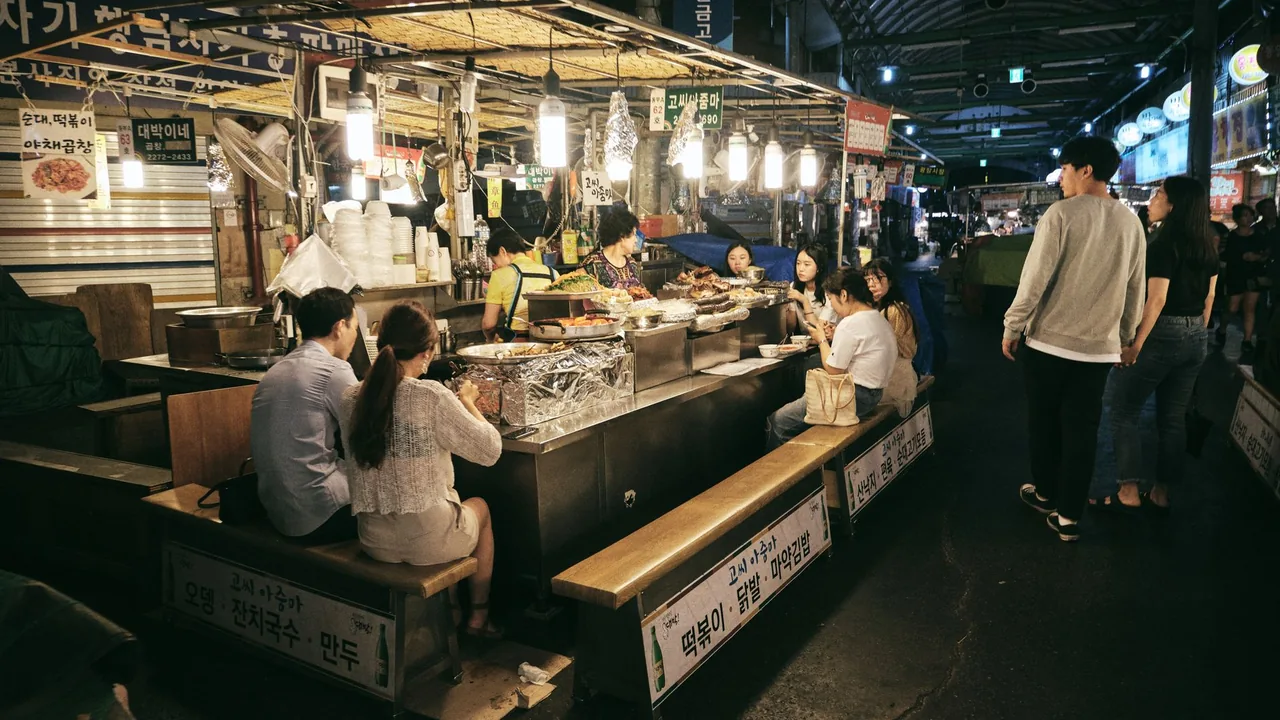
Forget what you think you know about Seoul food tourism. The Instagram-ready daytime markets with their color-coordinated vendor stalls and curated photo zones? That's not where Seoulites actually eat. The real food culture—the one that's shaped Korean street food for decades—happens when the sun goes down and the pojangmacha (tent restaurants) roll out their plastic stools. You'll find yourself elbow-to-elbow with construction workers, office workers killing time before a late subway ride, and yes, plenty of tourists who figured out the secret. This 2026 guide cuts through the noise and shows you exactly where to go, what to order, and how to avoid looking like you've never eaten standing up at 2 AM before.
Why Seoul's Late-Night Food Scene Is Unique in Asia
Seoul's night market ecosystem exists because of specific cultural and practical conditions you won't find replicated elsewhere in Asia, even in Tokyo or Bangkok.
First: the work culture. Seoul's white-collar workers routinely finish their shifts between 8 PM and midnight. Add drinking culture (hoesik, company dinners are mandatory) and you have a massive hungry audience flooding the streets at unconventional hours. This demand created supply.
Second: zoning flexibility. Unlike most major cities, Seoul's local governments tolerate—and in some cases, officially designate—pojangmacha zones. These aren't illegal street vendors operating in legal gray zones. Many neighborhoods have designated "street food alley" areas with basic infrastructure: water access, waste management, sometimes even seating areas.
Third: quality at scale. You're not eating "tourist food" or dumbed-down versions of real dishes. The vendor at a midnight tteokbokki stall has been making the same sauce for 15 years. She's selling to her neighbors, not passing tourists. This means ingredients, technique, and portions are all dialed in.
Fourth: price point. A satisfying meal—we're talking full stomach—costs ₩8,000 to ₩15,000 ($6–$11 USD). This is why students, elderly people, and night-shift workers eat here regularly. Volume and speed, not markup, drive profitability.
The result: Seoul has somewhere between 15,000 and 20,000 pojangmacha tents across the city. That's not a rough estimate—that's the scale you're dealing with. Every neighborhood has its version.
5 Must-Visit Night Market Neighborhoods (With Real 2026 Prices)
What it is: A covered traditional market that officially operates until 11 PM but has a significant after-hours crowd until 1 AM. It's the closest you'll get to an "official" night market feel in Seoul.
What to eat: Bindaetteok (mung bean pancake, ₩4,000–₩5,000), gimbap (₩5,000–₩7,000), and live octopus (sannakji, ₩12,000–₩15,000 per serving). The nakji (octopus) stalls are legendary—vendors will grill your octopus on a small charcoal burner while you watch.
Why go: This is the most accessible entry point if you've never done a Seoul night market. It's bustling, well-lit, and vendors are used to tourists. The energy is controlled chaos rather than overwhelming sensory overload.
Pro tip: Arrive between 9–10 PM. After 11 PM, many stalls start closing, and the vibe shifts from "evening market" to "late-night hangout."
What it is: A two-block stretch behind the main Myeongdong shopping area that's technically daytime-focused but has active night vendors until 2 AM, especially on weekends.
What to eat: Tteokbokki (₩6,000–₩8,000), hotteok (sweet pancake, ₩3,000–₩4,000), and grilled cheese tteok (₩5,000–₩6,000). The cheese-filled tteok vendors are newer but genuinely popular.
Why go: It's in central Seoul, near accommodation, and the pedestrian-only zone means zero traffic. You can meander, eat, and walk it off without planning logistics.
Realistic expectation: This area is tourist-heavy and prices reflect that. You're paying 15–20% premium over residential night markets, but the convenience and English-speaking vendors (some) make it worth it once.
What it is: A residential pojangmacha alley catering almost entirely to locals. No English signage. Minimal English spoken. Maximum authenticity.
What to eat: Galbijjim (braised short ribs, ₩18,000–₩22,000 per order, shareable), sundae (blood sausage, ₩7,000), boiled eggs (₩2,000). This is a drinking alley first, food alley second.
Why go: If you want to see how Seoulites actually spend Wednesday nights, this is it. The clientele is 90% Korean, mostly 25–55 years old, and there's zero performance for tourists.
Reality check: Go with a Korean friend if possible. You'll need to point and smile. Most vendors don't have English menus. The energy is convivial but you're genuinely eating in someone else's space.
What it is: The area around Gwangjang Market's eastern entrance, spanning Cheonggyecheon (the stream). Official food stall zone operating until 1 AM.
What to eat: Odeng (fish cake skewers, ₩2,000–₩3,000 per stick), gyeran mari (egg roll, ₩4,000–₩5,000), grilled squid (₩10,000–₩12,000). Street vendors here change seasonally—expect grilled corn in summer (₩5,000–₩6,000), roasted sweet potato in winter.
Why go: Scenic. You're eating beside the restored stream under low lighting. The Instagram potential is high without the market feeling contrived.
Best time: 10 PM–midnight. After midnight, it empties out.
What it is: A sprawling night market complex spanning several blocks near Hongik University Station. It's younger, louder, and definitely caters to the 20–35 demographic.
What to eat: Jjimjilbang-style hodugomul (hodugomul is red bean pasta, ₩5,000), spicy rice cakes (₩7,000–₩9,000), fried dumplings (₩6,000–₩8,000). Expect international fusion: Korean-Mexican tacos, Korean-Japanese ramen hybrids.
Why go: Energy. This is where Seoul's younger crowd eats post-club, post-noraebang (karaoke). The atmosphere is vibrant, vendors are patient with foreigners, and you can easily spend 2–3 hours hopping between stalls.
Heads up: Busiest Thursday–Saturday after 11 PM. Quieter but still active weeknights.
What it is: A semi-official night market area at the foot of Naksan Park, operating 7 PM–2 AM daily. It's smaller than Gwangjang (maybe 20–30 vendors) but highly concentrated.
What to eat: Budae jjigae (army stew, ₩12,000–₩16,000, feeds 2–3), ramyeon (instant noodles, ₩4,000–₩5,000), pajeon (savory pancake, ₩8,000–₩10,000). The army stew here is legitimately good—vendors use actual broth bases rather than instant stock.
Why go: Post-hike food destination. Naksan Park itself is walkable, and eating here afterward is the natural Seoul local move. It's also quieter than downtown markets, so conversation is possible.
Note: Most vendors accept card, but bring some cash (₩20,000–₩50,000). Not all have card readers.
8 Essential Etiquette and Practical Tips
- Bring cash, always. Credit cards work at maybe 70% of pojangmacha now (2026), but that 30% includes some of the best vendors. ATMs are everywhere, but having ₩50,000–₩100,000 on hand prevents awkwardness.
- Plastic stools are normal. You'll sit on small, often wobbly plastic stools at plastic tables. This isn't poverty tourism—this is how 80% of Seoul eats these meals. Embrace it or order takeaway.
- You don't need to make eye contact or speak. Point at what someone nearby is eating, make the eating gesture (hand to mouth), and nod. Vendors understand. "하나 주세요" ("one please") in any pronunciation gets you fed.
- Orders are simultaneous, not sequential. Don't wait for your food before ordering drinks or additional items. Multiple vendors coordinate; food arrives when ready, not necessarily in order-placement sequence.
- Condiments are self-serve. Napkins, wet wipes, hot sauce, soy sauce, vinegar—all sit on the table or counter. Use freely. This isn't theft; it's expected.
- Linger respectfully. You can sit for 45 minutes nursing a single beer (₩5,000–₩7,000 for Cass, ₩4,000–₩5,000 for soju). Vendors don't rush you. But if 10 people are standing waiting, eat and go.
- Peak hours = 10 PM–1 AM. If you want atmosphere and selection, avoid 7–9 PM (too empty) and after 1:30 AM (vendors closing). Weekends peak later; weeknights earlier.
- Sanitation is fine. Korean street food is heavily regulated and vendors reuse the same oil, water, and sauces. By Western standards, hygiene might seem loose. By global street food standards, this is clean. Your immune system will handle it. Locals eat here every week without issues.
- Tipping doesn't exist. Leave ₩1,000–₩2,000 loose change only if you genuinely feel moved. Most vendors refuse additional money. Don't overthink it.
- Respect the queue, even if it's unclear. There will be a line. It may seem formless. It's not. Ask a vendor or nearby person: "마지막 사람이 누구예요?" ("Who's last?") and join behind them. Cutting is aggressively not tolerated.
Frequently Asked Questions
Q: Is it safe to eat at night markets alone?
A: Yes, completely. Seoul's night markets are some of the safest eating environments on earth. Well-lit, crowded (except early mornings), and vendor-policed. Solo travelers, solo women, everyone eats alone here regularly. The only genuine risk is food safety, which is statistically very low. More risk comes from walking to the market drunk than eating the food.
Q: What's the difference between pojangmacha and a restaurant?
A: Pojangmacha are temporary street vendors operating from tents or carts with minimal equipment (a grill, a pot, a counter). Restaurants are permanent, licensed establishments with tables and full kitchens. Pojangmacha prices are 40–60% cheaper because overhead is minimal. Quality varies widely at both; price doesn't indicate quality. A ₩6,000 tteokbokki from a pojangmacha can taste better than a ₩15,000 version from a sit-down restaurant.
Q: Are night markets open every day?
A: Most neighborhoods have 5–6 active days per week. Some stalls are seasonal (grilled corn in summer, roasted sweet potato in winter). Official market areas like Gwangjang and Cheonggyecheon operate daily. Smaller residential alleys close 1–2 days weekly, usually Monday or Tuesday. Check the specific location before planning a late-night eating adventure on a random Tuesday.
Q: How much should I budget for a full night market meal?
A: Budget ₩15,000–₩25,000 ($11–$19 USD) for a satisfying meal: one main item (tteokbokki, grilled meat, soup, ₩6,000–₩12,000), one side item (hotteok, gimbap, ₩4,000–₩7,000), one drink (beer, soju, coffee, ₩3,000–₩7,000), and loose change for extras. If you eat at tourist-adjacent areas like Myeongdong, add 30%. If you eat in pure local areas like Naksuwon, prices stay low but social friction increases (language, navigation).
Q: Do I need Korean language skills?
A: No, but 3–5 phrases help: "하나 주세요" (one, please), "얼마예요?" (how much?), "카드 돼요?" (card okay?), and "감사합니다" (thank you). Google Translate's camera function works well for signage. Most interactions are non-verbal. Younger vendors (under 40) in tourist areas speak some English. Older vendors in residential areas don't, but they've fed confused foreigners before.
Q: What's the best item to start with if I'm new to street food?
A: Hotteok (sweet red bean pancake) is approachable, filling, and cheap (₩3,000–₩4,000). It's sweet, warm, and no flavor surprises. From there, move to tteokbokki (chewy rice cakes in red sauce, ₩6,000–₩8,000) or gimbap (seaweed rice roll, ₩5,000–₩7,000). These are gateway street foods. After eating those, you're ready for more adventurous items: sundae (blood sausage), odeng (fish cake), or live octopus.
Final Thoughts: How to Approach Seoul Night Markets
You're not visiting Seoul night markets to check a box. You're eating them because this is how millions of people in this city actually sustain themselves between 8 PM and 3 AM. That casual dinner at a pojangmacha alley is simultaneously a tourist experience and completely mundane Seoul life.
Start with Gwangjang or Myeongdong if you want scaffolding and English. Graduate to Naksuwon or Naksan Park when you want authentic. Don't overthink hygiene, language, or etiquette—you'll figure it out by watching others.
The best night market meal you'll have in Seoul won't be the most expensive one. It'll be the one where you ordered wrong (pointed at the wrong thing), the vendor laughed, gave you what they thought you actually wanted, and it turned out to be perfect.
That's Seoul night markets.
---
Ready to explore more Seoul food secrets? Check out Local Pick, a paid guide to 10 Seoul neighborhoods and food spots, or ask the KORLENS AI chat for night market suggestions based on your neighborhood. It is an AI assistant that replies in seconds, not a human team, and it works from Korea Tourism Organization open data.
Next Step
About this guide
KORLENS is run by one person (KunStudio, a solo studio in Korea), not an editorial team. Guides are AI drafts based on public sources; some use Korea Tourism Organization TourAPI open data. KORLENS does not claim on-site visits or scheduled re-checks, so confirm hours, prices and closures with the venue before you go. Page last edited: 2026-05-22.
Plan your Korea trip with the KORLENS AI chat
Got a follow-up question after reading this? Ask the KORLENS AI chat in plain English. It is an AI assistant, not a person, and it replies in seconds with places from Korea Tourism Organization open data.
Ask the KORLENS AI chatCurious about Korean Saju? Try sajuapp.app
1,000-year-old Korean astrology, decoded by AI — available in 9 languages.
Is it worth visiting, the best time to go, crowds and real cost.
Best time to visit Seoul, month by month →Gangnam Luxury Guide 2026: Where Seoul's Wealthy Shop and Eat
Skip the tourist traps. This insider guide shows you where Seoul's ultra-wealthy actually shop, dine, and spend in Gangnam's most exclusive enclaves—with real p
Itaewon Guide for Foreigners 2026: Where to Eat, Drink, Stay
Itaewon's reinvented itself. Skip the tourist traps and hit the real spots where locals actually spend money. This is your insider's map.