Gwangju on a Budget: How to Travel for KRW 100,000/Day in 2026
Gwangju isn't Seoul—and that's exactly why you can eat, sleep, and explore for under 100K daily. Here's how locals do it.
# Gwangju on a Budget: How to Travel for KRW 100,000/Day in 2026
Gwangju isn't on every backpacker's radar—and that's the point. While Seoul bleeds your wallet dry, this southwestern city lets you eat like royalty, sleep comfortably, and explore genuine neighborhoods without the tourist markup that comes with Instagram fame. The math is simple: KRW 100,000 (roughly USD 75) covers everything if you know where to look. You won't be sleeping in dorms or eating ramen for every meal. You'll actually live here, not just pass through.
Where the Savings Actually Are in Gwangju — By Category
Accommodation: KRW 30,000–45,000 Forget the hostels with "free" welcome shots and overpriced beer. Gwangju's guesthouses ("yeoinsuk") run KRW 25,000–40,000 per night. Small hotels with actual private bathrooms cost KRW 45,000–60,000. Compare this to Seoul's backpacker dorms at KRW 35,000–50,000 with paper-thin walls. In Gwangju, you get silence and privacy for less.
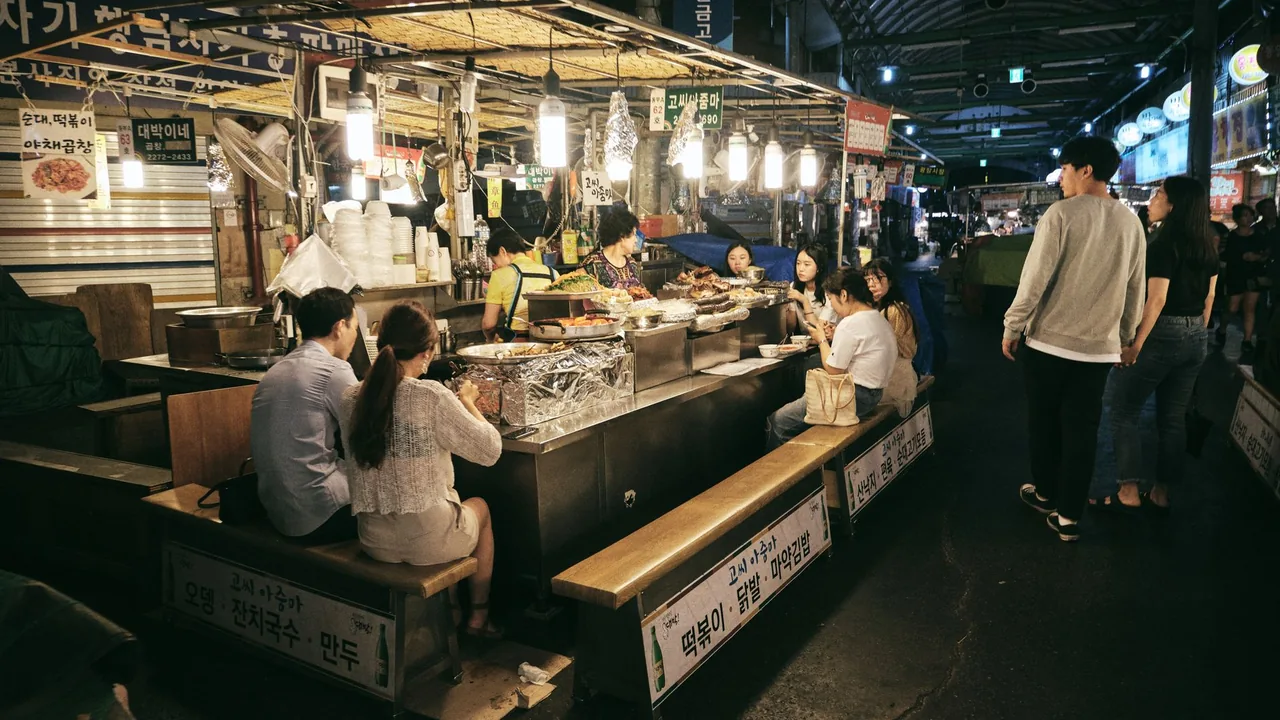
Street Food & Markets: KRW 25,000–35,000 This is where you'll find your real advantage. A proper meal at the gwangju street food market—think tteokbokki, hotteok, kimbap, and grilled skewers—costs KRW 5,000–8,000 per item. Eat three substantial street meals daily, and you're at KRW 25,000. Restaurant meals in side streets run KRW 8,000–12,000 for rice bowls and noodles. Seoul's equivalent will cost 30–40% more.
Public Transport: KRW 5,000–8,000 Gwangju's bus and subway system is straightforward and cheap. A single ride is KRW 1,250 (bus) or KRW 1,450 (subway). A rechargeable T-money card saves you money on transfers. Most days, you'll spend KRW 5,000–8,000 total moving around the city.
Attractions & Entertainment: KRW 10,000–15,000 Museums, galleries, and cultural sites rarely exceed KRW 5,000–10,000 entry. Many neighborhoods are free to explore. You're not paying theme park prices here.
Cushion/Contingency: KRW 10,000–15,000 Coffee, unexpected meals, or small purchases. This buffer keeps you under 100K without stress.
5–7 Specific Neighborhoods & Spots with Real KRW Prices
Location: Juwol-dong, near Gwangju Station What you're eating: Tteokbokki (KRW 5,000), hotteok stuffed with brown sugar and nuts (KRW 3,000), grilled intestine skewers (KRW 4,000–6,000), kimchi pancakes (KRW 6,000–8,000), Korean corn cheese hot dogs (KRW 5,000).
This is the heart of budget eating in Gwangju. Vendors here don't inflate prices for tourists because tourists rarely find this place. Come after 6 PM when the night market activates. Eat standing up, chat with ajummas (older Korean women) running stalls, and understand why Gwangju has a reputation for exceptional food culture. Budget KRW 15,000–20,000 for a full, satisfying meal.
Why: Shopping district with cheap street food clusters Sample prices: Kimbap from small shops (KRW 4,000–5,000), gimbap triangle sets (KRW 3,000), tteokbokki (KRW 5,000), gyeran-mari (rolled egg) (KRW 3,000–4,000).
Chungjang-ro is Gwangju's main downtown strip. Ignore the chain cafes; instead, hunt the 20–30 small kimbap and tteokbokki stalls tucked into side alleys. The vendors know locals who know value. You'll eat better for less than anywhere else in the district.
Vibe: Residential, calm, no tourist premium Where to eat: Local "bapsang" (rice restaurants), convenience stores, one particular jjamppong (spicy seafood noodle) spot at KRW 9,000.
Stay in a guesthouse here and you're 15 minutes from downtown via bus, but paying KRW 25,000–35,000 for accommodation instead of KRW 40,000+. Eat like neighbors, not tourists. The bus depot area has dozens of small restaurants where construction workers and office staff actually eat—those places are your price target.
Character: Historic, colonial-era architecture, artistic community Food budget: KRW 8,000–12,000 for decent restaurant meals Entry cost to cafes/galleries: Free to KRW 5,000
Wander here for free (the neighborhood itself is the attraction). Stop at a small cafe (KRW 3,000–4,000 for coffee) and sit for an hour. Eat lunch at one of the family-run restaurants; the owners will likely be curious about where you're from. This area teaches you Gwangju's artistic soul without emptying your wallet.
Type: Traditional covered market Sample prices: Prepared kimbap (KRW 4,000), gimbap triangle (KRW 2,500), boiled eggs (KRW 1,500), dried seaweed snacks (KRW 3,000–5,000).
If you want fresh produce, snacks, or prepared food to take back to your guesthouse, this is where Gwangju residents shop. Prices are 20% lower than convenience stores. Chat with ajummas; some will offer you free samples.
Vibe: College district, cheap eats everywhere Meal average: KRW 6,000–8,000 for full rice bowls
Where there are students, there are cheap restaurants. Sanjeong-dong feeds thousands daily on minimal budgets. Kalguksu (handmade noodle soup), galbijjim (braised short ribs), and dak-bokkeum (spicy stir-fried chicken) all cost KRW 6,000–9,000. You won't recognize half the places, but they'll be packed with locals during meal times.
Active: 7 PM–midnight What's cooking: Pojangmacha (street tent stalls) serving kimchi jjigae (stew), sundae (Korean blood sausage), tteok (rice cakes), dumplings. Price range: KRW 4,000–7,000 per item, KRW 18,000–25,000 for a full meal with banchan (side dishes).
This is where Gwangju's nightlife eats. It's not fancy, but it's where you'll understand the city's food obsession. Sit at a stall, order soju and beer, and eat like you belong there. The people-watching alone is worth the trip.
Practical Tips & Etiquette
- Use a T-money card for transport. Buy one at any convenience store (GS25, CU, Emart24) for KRW 2,500. It works on buses and subways across Korea and saves you money on transfers.
- Eat where there's a line. If three ajummas are queuing for tteokbokki at 7 PM, that stall is where the value is. Your eyes do the research.
- Visit markets in the morning or after 6 PM. Daytime market crowds are sparse. Evening is when vendors are restocking and prices are aggressive.
- Never eat at restaurants with English menus in tourist areas. The markup is automatic. Go to places where the menu is Korean-only and handwritten. This signals local pricing.
- Learn three Korean phrases: "Eolmaeyo?" (How much?), "Jom juseyo" (Give me some), and "Matisseyo" (It's delicious!). Vendors reward politeness and effort with larger portions.
- Bring a small backpack to markets. Buy snacks, fruit, and drinks at market prices and keep them in your room. Convenience store prices are 30–50% higher.
- Ask your guesthouse owner for eating recommendations. They know exactly which family-run restaurants offer the best value. Many will write down addresses in Korean for you.
- Skip alcohol at restaurants; buy at convenience stores instead. Beer and soju cost 2–3x more at pojangmacha tents than at GS25. Grab snacks and a bottle, eat street food, and enjoy a drink for KRW 8,000 instead of KRW 20,000.
- Cash is king at street food stalls and small restaurants. Many don't accept cards, and those that do sometimes add a 3% surcharge. Withdraw at ATMs in your neighborhood.
- Respect personal space and don't photograph food vendors without permission. Street food culture is living, working culture—not a photo op. Ask ("Jal dweyo?" = Okay?), and most will happily pose.
FAQ
Q: Can you really eat well for KRW 100,000 per day?
Yes, comfortably. Budget breakdown: accommodation (KRW 35,000), three meals (KRW 30,000–35,000), transport (KRW 6,000), and buffer (KRW 12,000–15,000) lands you at around KRW 88,000–95,000 daily. You'll eat at actual restaurants, not just street food, and sleep in a private room. The key is consistency—repeat your favorite cheap spots instead of chasing novelty.
Q: What's the best time to visit Gwangju on this budget?
Winter (November–February) and early autumn (September–October) are ideal. Hotels and guesthouses drop prices by 20–30% outside peak summer and December holidays. Food prices remain stable year-round. Avoid early May (spring holidays) and late December through early January.
Q: Is Gwangju safe for solo travelers on a tight budget?
Yes. Gwangju is one of Korea's safest cities. Budget travelers aren't targets for crime. Walk alone at night without concern. The only risk is spending more than intended because food is so good—not a real problem.
Q: How close is Gwangju to other Korean cities?
Seoul is 3.5 hours by KTX train (KRW 55,000–65,000). Busan is 2.5 hours by train (KRW 45,000–55,000). Jeju Island is 50 minutes by plane (budget airlines from KRW 35,000). Gwangju is a natural regional hub, so you can do short trips without breaking budget.
Q: Which accommodation style is best for a 100K budget?
Small family-run guesthouses ("yeoinsuk") at KRW 30,000–35,000 per night. Avoid branded hostels (premium pricing) and luxury hotels (obviously). Small guesthouses are often run by older couples who'll give you restaurant recommendations, local tips, and sometimes even free breakfast.
Q: Should I eat at street food markets or sit-down restaurants?
Both. Street food is faster and slightly cheaper (KRW 4,000–8,000 per item). Small restaurant meals are KRW 8,000–12,000 but include side dishes (banchan) and you can sit longer. Mix them based on your mood and weather. Rain? Sit-down restaurant. Nice evening? Street food market.
Your Gwangju Budget Trip Starts Now
Gwangju doesn't demand you compromise on food, comfort, or experience to hit a KRW 100,000 daily budget. It's not a sacrifice—it's smarter travel. You'll eat better than you would in Seoul, sleep better than in a crowded hostel, and actually understand a Korean city beyond the Instagram highlights.
The gwangju street food market alone is worth the trip. But once you're here, you'll realize Gwangju rewards people who slow down and pay attention. That's where the real value is—and it costs nothing.
Ask the KORLENS AI chat for Gwangju place suggestions for a tight budget based on your interests. It is an AI assistant that replies in seconds, not a human team, and it works from Korea Tourism Organization open data. Also visiting Seoul? Seoul Local Picks covers Seoul only.
Next Step
About this guide
KORLENS is run by one person (KunStudio, a solo studio in Korea), not an editorial team. Guides are AI drafts based on public sources; some use Korea Tourism Organization TourAPI open data. KORLENS does not claim on-site visits or scheduled re-checks, so confirm hours, prices and closures with the venue before you go. Page last edited: 2026-06-08.
Plan your Korea trip with the KORLENS AI chat
Got a follow-up question after reading this? Ask the KORLENS AI chat in plain English. It is an AI assistant, not a person, and it replies in seconds with places from Korea Tourism Organization open data.
Ask the KORLENS AI chatCurious about Korean Saju? Try sajuapp.app
1,000-year-old Korean astrology, decoded by AI — available in 9 languages.
Is it worth visiting, the best time to go, crowds and real cost.
Best Neighborhoods to Stay in Gwangju for Foreigners (2026 Guide)
Skip the tourist traps. Here's where actual Gwangju locals live—and why you should too. Honest neighborhood breakdown with prices and insider tips for 2026.
Gwangju Transport Guide for Foreigners (2026): Subway, Bus, Taxi
Master Gwangju transport without confusion. Real prices, insider tips, and what actually works for foreigners navigating subway, bus, and taxi systems.