Daegu Cherry Blossom 2026: Best Spots and Exact Timing
Skip Seoul crowds. Daegu's cherry blossoms peak 7–10 days earlier, with fewer tourists and better photo ops. Here's exactly where to go and when.
The 2026 cherry blossom season has ended. Unverified 2026 bloom dates were removed from this guide. The 2027 forecast is here: Korea Cherry Blossom Forecast 2027.
# Daegu Cherry Blossom 2026: Best Spots and Exact Timing
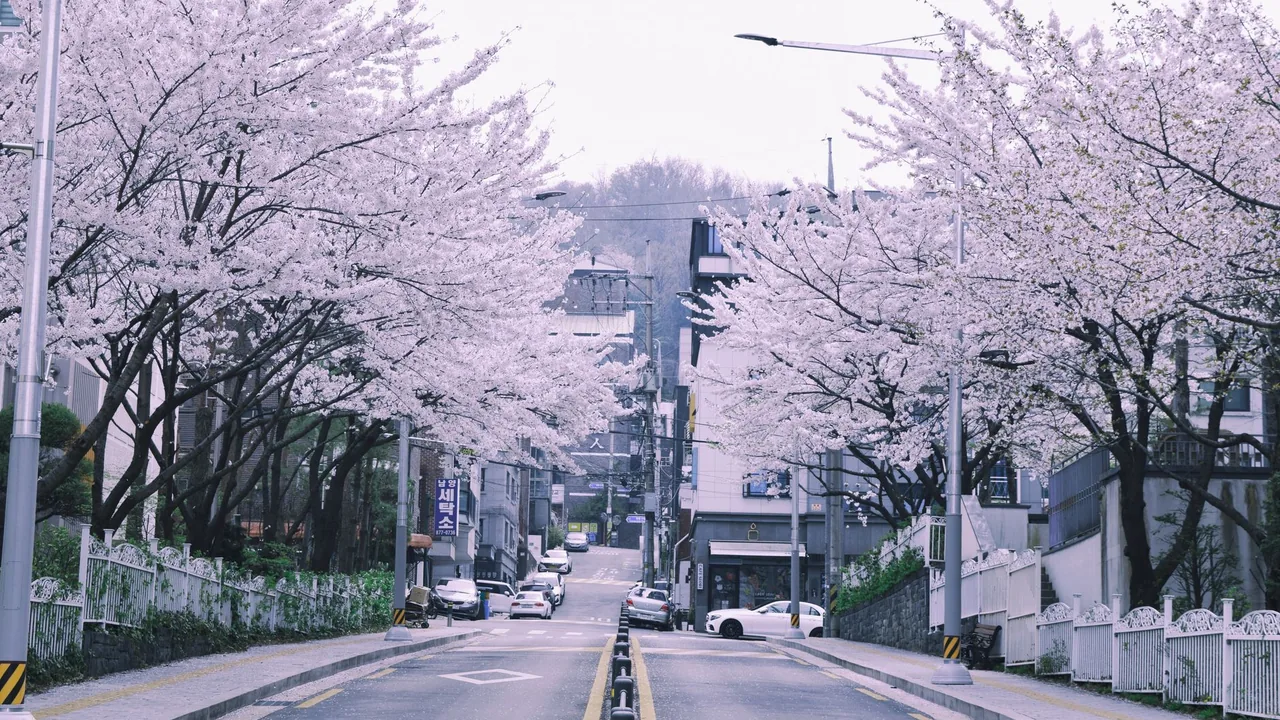
If you're planning your Korea cherry blossom trip around Seoul's peak bloom, you're already two weeks behind Daegu. While northern Korea is still budding, Daegu's 300+ cherry trees are in full bloom—and the crowds are a fraction of what you'll find near the Han River. This is the insider move: arrive in Daegu between late March and early April, catch the peak, then head north as Seoul warms up. You'll see the same spectacular sakura without fighting 50,000 people for a photo.
How Daegu's Cherry Blossom Timing Differs from Seoul
Daegu's latitude and microclimate mean it blooms 7–10 days earlier than Seoul. Daegu typically peaks around March 28–April 5, while Seoul typically peaks April 5–12. This isn't just a scheduling convenience—it's a regional weather pattern rooted in Daegu's position in the Nakdong River basin and its warmer spring temperatures.
The Korea Meteorological Administration (KMA) typically issues official bloom forecasts by mid-March, but locals watch tree conditions from mid-March onward. Daegu's parks begin showing visible pink buds by March 20–22, with full bloom arriving by late March. By early April, petals are dropping, though some specimens in shadier spots may linger until mid-April.
Another local advantage: Daegu's cherry blossom season coincides with the Daegu Cherry Blossom Festival (typically held late March to early April at Apsan Park and other venues), which means curated viewing spaces, night illuminations, and food vendors—but without Seoul's crushing weekend crowds.
5 Prime Cherry Blossom Spots in Daegu
Location: Dong-gu, accessible via cable car from Apsan Station Peak bloom: Late March–early April What you'll find: 2,000+ cherry trees lining walking trails and the summit viewing platform. The cable car (₩5,000 round-trip) gives you aerial views of the entire blossom corridor. Peak hours are 10 AM–3 PM on weekends; arrive by 8 AM weekday mornings for solitude. Cost: Cable car ₩5,000; entry free Pro tip: The upper ridge walk near the summit station has fewer tourists and equally stunning views. Pack water—there's minimal shade once blossoms drop.
Location: Seo-gu, near Opo Station (Line 2) Peak bloom: Late March–early April What you'll find: A smaller, overlooked gem with roughly 800 cherry trees, a pond reflecting blossoms, and a walking trail that loops 45 minutes. Daegu locals come here specifically to avoid Apsan crowds. Nighttime illumination runs until 9 PM during festival week. Cost: Entry free Practical details: Parking is ₩2,000/hour; street parking available. Convenience stores (GS25, CU) are at the park entrance. The reflection shots of blossoms on the pond are Instagram-worthy.
Location: Dalseo-gu (south Daegu) Peak bloom: Early–mid April (slightly later than northern parks) What you'll find: Daegu's botanical garden with a dedicated cherry tree section, plus 1,000+ other flowering species. If you're visiting early April and Apsan's blossoms are dropping, Duryu will still be in peak bloom. The ₩5,000 entry includes access to a small café and cleaner restrooms than hiking-focused parks. Cost: ₩5,000 What makes it special: Less crowded than Apsan, and the landscaped layout means you can view blossoms without serious hiking. Wheelchair accessible on main paths.
Location: Runs 15+ km through central Daegu; main blossom section is Suseong-gu and Nam-gu Peak bloom: Late March–early April What you'll find: Cherry trees line the riverbank for kilometers. You can bike, walk, or picnic. Rental shops near Nakdong Park offer bikes at ₩10,000–₩15,000 for 2 hours. The stretch from Nakdong Park to Seongnae Park is ideal for casual visitors; more committed cyclists continue south. Cost: Bike rental ₩10,000–₩15,000 Insider move: Go at sunset (around 6:30–7 PM) when day-trippers leave and light turns golden. You'll have tree-lined paths mostly to yourself.
Location: Off Seongnae area, accessible via footbridge Peak bloom: Late March–early April What you'll find: A small riverside island (technically a peninsula) with 200+ cherry trees, minimal infrastructure, and almost zero tourist infrastructure. This is where Daegu residents go. Bring a picnic; there's one small kiosk with basic drinks. Cost: Entry free Reality check: No restrooms, no parking (park 500m away and walk). Picnic culture is strong here—see families with full meals under blossoms—so bring snacks and a blanket.
Location: Jung-gu, downtown Daegu Peak bloom: Late March–early April What you'll find: Urban cherry blossoms in the city center. Streets around Woobang Tower and Dongseong-ro have planted cherry trees; the area has shops, restaurants, and cafés. Not a nature destination, but excellent if you're spending time downtown and want blossom photos without leaving the city. Cost: Free Atmosphere: Very Korean urban spring—families, couples, street vendors selling tteokbokki (₩4,000–₩6,000) and hotteok (sweet pastry, ₩2,500).
8 Essential Cherry Blossom Etiquette & Practical Tips
- Don't shake the trees or pull branches. This damages blossoms and next year's growth. Photograph what you see; don't create the shot you want.
- Bring a mat or picnic blanket. Parks allow blankets on grass. Most people picnic; it's culturally normal. Buy kimbap (rolled rice, ₩6,000–₩8,000) or gimbap sets from nearby convenience stores.
- Arrive early on weekends. Peak hours (11 AM–4 PM) on Saturdays/Sundays bring families and crowds. 7–9 AM is quiet. Weekday mornings are genuinely solitary.
- Check the KMA forecast one week prior. Visit www.kma.go.kr for official bloom status. Daegu's forecast is usually accurate within 2–3 days during peak season.
- Wear layers. Late March mornings in Daegu are 8–12°C; afternoons reach 15–18°C. Long-sleeve shirts and a light jacket are essential. Rain is rare but possible—check forecasts.
- Use the subway or designated parking. Apsan Park's lot fills by 10 AM weekends. Line 1 subway stations (Apsan, Bangbae) and Line 2 (Opo for Jisan) are cheaper and faster than hunting parking.
- Respect quiet zones and wildlife. Some parks protect nesting birds; stay on marked trails. Don't play loud music or use drones without permits.
- Bring cash for small vendors. Peak season brings street vendors (hotteok, dalgona, rice cakes). Many only accept cash (₩2,500–₩5,000). ATMs are at park entrances but may queue up.
- Plan restroom breaks in advance. Hiking trails have limited facilities. Apsan Park's restroom is at the lower cable car station; Duryu Park's are mid-route. Use these before heading deeper into parks.
- Don't litter, even food waste. Korean parks are meticulously maintained. Pack out everything. Locals notice and disapprove of careless tourists.
FAQ: Daegu Cherry Blossom
A: The 2026 season is over, and this guide does not give an observed 2026 peak date for Daegu. Based on historical data, Daegu typically peaks between March 28–April 5, and the Korea Meteorological Administration issues its official forecast by mid-March each year. Apsan Park usually leads other locations by 2–3 days. Check the KMA website one week before your trip for current predictions. Peak bloom lasts 5–7 days before petals begin dropping, though some late-blooming specimens may persist into mid-April.
A: Daegu blooms 7–10 days earlier due to its southern location and warmer microclimate. While Seoul peaks around April 5–12, Daegu typically peaks March 28–April 5. Daegu also has far fewer tourists—expect thousands rather than tens of thousands. The Daegu Cherry Blossom Festival (late March–early April) offers curated experiences and night illuminations without Seoul's crushing crowds, making it ideal for serious photographers.
A: Apsan Park. It has the highest concentration of cherry trees (2,000+), cable car access for less strenuous viewing, and peak festival programming during bloom season. Arrive by 8 AM on a weekday to avoid crowds. Budget 3–4 hours for the cable car, summit walk, and trail exploration. If you prefer a quieter urban option, Woobang Tower area (downtown Daegu) offers city blossom shots with restaurants and cafés nearby.
A: Weekdays (Monday–Friday) are dramatically quieter—you'll have parks to yourself until noon. Weekends draw families and couples; parking fills by 10 AM, and trails become crowded by mid-morning. If you have schedule flexibility, visit Tuesday–Thursday mornings for optimal solitude and photography conditions. If weekends are your only option, go very early (7–8 AM) or in the evening (5–7 PM).
A: Layers (long sleeves, light jacket), comfortable walking shoes, sunscreen, sunglasses, a hat, and a small backpack. Bring a picnic blanket, snacks (kimbap from a convenience store, ₩6,000–₩8,000), and 1.5L of water. A portable phone charger is essential for photos. Cash (₩20,000–₩50,000) covers parking, snacks, and vendors. Wear weather-appropriate clothing; late March mornings are cool, afternoons warmer.
A: Late March coincides with Daegu's school spring break (typically March 24–April 6), meaning weekday parks still see moderate family crowds. The first weekend of April is busy. Mid-week offers the best balance of perfect blooms and lighter crowds. Avoid weekends during the official Daegu Cherry Blossom Festival period if you prefer quiet spaces.
Plan Your Daegu Cherry Blossom Trip
Skip the Seoul surge. Daegu's cherry blossoms peak earlier, draw fewer tourists, and offer equally stunning landscapes—from riverside paths to mountain overlooks. Whether you're biking the Nakdong River, riding the Apsan cable car, or picnicking on Banwol Island, you'll experience Korea's most celebrated spring ritual on your own terms.
Book your accommodations in Jung-gu or Suseong-gu (central, near subway lines) by early March. Download the KMA forecast app, check Apsan Park's event schedule, and save this guide.
Ask the KORLENS AI chat for Daegu spring blossom spot suggestions based on your interests. It is an AI assistant that replies in seconds, not a human team, and it works from Korea Tourism Organization open data. Also visiting Seoul? Seoul Local Picks covers Seoul only.
Next Step
About this guide
KORLENS is run by one person (KunStudio, a solo studio in Korea), not an editorial team. Guides are AI drafts based on public sources; some use Korea Tourism Organization TourAPI open data. KORLENS does not claim on-site visits or scheduled re-checks, so confirm hours, prices and closures with the venue before you go. Page last edited: 2026-10-04.
Plan your Korea trip with the KORLENS AI chat
Got a follow-up question after reading this? Ask the KORLENS AI chat in plain English. It is an AI assistant, not a person, and it replies in seconds with places from Korea Tourism Organization open data.
Ask the KORLENS AI chatCurious about Korean Saju? Try sajuapp.app
1,000-year-old Korean astrology, decoded by AI — available in 9 languages.
Is it worth visiting, the best time to go, crowds and real cost.
7 Best Day Trips from Daegu (2-Hour Radius, 2026)
Skip the crowded Seoul day trips. These 7 Daegu countryside escapes within 2 hours offer genuine local culture, mountain hikes, and regional food without touris
Daegu 3-Day Itinerary for First-Time Visitors (2026)
Skip the Seoul crowds. Daegu offers authentic Korean culture, stunning mountain temples, and a skyline city center without the tourist markup. Here's your insid