Busan Transport Guide for Foreigners (2026): Subway, Bus, Taxi
Navigate Busan like a local. Master subway, bus, taxi systems with real prices, insider tips, and what actually works for foreign travelers.
# Busan Transport Guide for Foreigners (2026): Subway, Bus, Taxi
Here's what nobody tells you about Busan transport: the subway is faster than Seoul's, buses are cheaper than you'd expect, and your biggest mistake will be not downloading Naver Map before you arrive. Most travel guides gloss over the actual friction points—like why you can't tap your phone at every station or how to actually flag down a taxi when there's no queue. This guide cuts through the noise and gives you what works.
What Actually Works for Foreign Travelers
Busan's subway system is genuinely excellent. Four lines (1, 2, 3, and Gimhae Line) connect most places you'll visit. Trains run from 5:30 AM to midnight, and frequency is every 3-8 minutes during peak hours.
Why it works: Stations have English signage, the Busan Metro app shows real-time arrivals, and tickets are dirt cheap. A single journey costs 1,250₩–2,450₩ depending on distance. A day pass runs 4,000₩, which pays for itself after three trips.
What doesn't work: The system is notoriously crowded during 7–9 AM and 5–7 PM. If you're traveling then, expect compressed shoulder-to-shoulder conditions that make you question personal space norms.
Foreigners typically ignore buses, which is a mistake. Busan's bus network is more extensive than the subway and gets you to neighborhoods tourists never see.
Why it works: Buses cost 1,250₩–2,500₩ depending on distance. Many routes have English announcements. Real-time tracking is available through Naver Map or Kakao Map.
What doesn't work: Bus routes aren't intuitive if you don't read Korean. Stops aren't always clearly marked in English. Drivers won't wait if you're slow boarding—they'll close doors and move on.
Taxis are cheaper than Seoul and faster than waiting for buses. Base fare is 3,800₩ (2026 prices), plus 100₩ per 142 meters.
Why it works: You don't need Korean to point at your phone's map. Most drivers accept card payments. Call-taxis (like Kakao Taxi) eliminate the street-hailing guessing game.
What doesn't work: Surge pricing kicks in 10 PM–4 AM (20% extra). Some drivers refuse short trips. Few speak English, so your destination must be clear visually.
5 Neighborhoods + Real Transit Costs to Get There
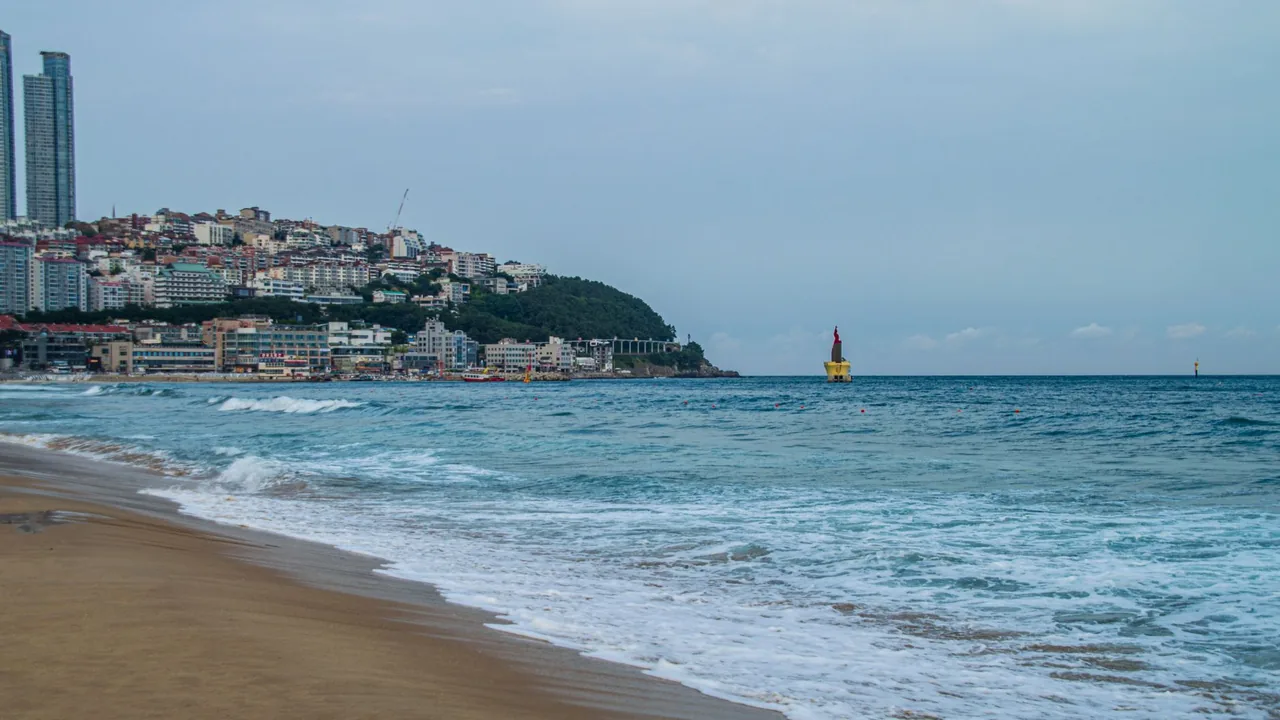
Subway Line 2, Haeundae Station (Exit 5)
One ride from central Busan: 1,950₩. From Nampodong (downtown), it's 9 minutes. This is where everyone goes, so expect crowds on weekends. Pro tip: exit at Busan National University Station instead if you want a less-packed beach experience on the same line.
Subway Line 1, Jungang Station (Exit 10)
From Haeundae: 1,950₩. From airport: 2,450₩. This is old-school Busan—street food, vintage shops, chaotic energy. You'll probably take the subway here multiple times. A single journey beats any day pass if you're spending time in clusters.
Subway Line 1, Toseong Station (Exit 5), then Bus 1-1 or 2
Total cost from Nampodong: 1,250₩ (subway) + 1,250₩ (bus) = 2,500₩. The bus takes 15 minutes uphill. This hillside neighborhood is Instagram-famous for a reason—colorful houses stacked like LEGO blocks. Crowds peak 11 AM–3 PM; go early or late.
Subway Line 1, Nampo Station (Exit 2)
From anywhere downtown: 1,250₩–1,950₩ depending on origin. This pedestrianized area around the Film Festival Square is walkable once you exit. Street vendors, cafes, and that particular Busan vibe of "slightly more chaotic than Seoul."
Subway Line 1, Jagalchi Station (Exit 6)
Adjoining Nampodong—literally next stop on Line 1. Cost: 1,250₩. The smell is intense (in a good way). Fish vendors will pressure you to buy; politely declining in any language works. Eat raw fish at ground-floor stalls; it's cheaper than restaurants.
Subway Line 1, Nampo Station, then Bus 30 or 9
Total from downtown: 1,950₩. Bus takes 30 minutes but views of the Korea Strait are worth it. Weekday mornings are peaceful; weekends are mobbed with Korean retirees.
Subway Lines 1 & 2, Busan Station
A major transport hub, especially if you're catching KTX trains. Cost varies by origin but never exceeds 2,450₩. The station itself has a small shopping mall and restaurants—not essential but useful for layovers.
Etiquette & Practical Tips: 10 Things to Actually Do
- Tap your transit card correctly. Use a Korail Pass, T-money card, or your credit card at readers marked with a wave symbol. Tap on entry and exit—if you don't tap out, you'll be overcharged.
- Stand on the correct side of escalators. In Busan, stand on the left. Seoul does the opposite; don't be the confused tourist blocking traffic.
- Yield priority seating. Seats marked in pink/blue are for elderly, pregnant women, and disabled people. If you're young and healthy, don't sit in them—locals will stare, and you'll deserve it.
- Download Naver Map or Kakao Map before arrival. GPS, real-time transit, walking directions—these apps are non-negotiable. They work offline for maps; online for real-time updates.
- Be silent on transit. Phone conversations are social death on Busan trains. Earbuds required; the only sound should be the train itself.
- Bring small bills for taxis. ATMs are everywhere, but some older drivers claim card readers are "broken." Carrying 10,000₩–50,000₩ in cash eliminates friction.
- Don't eat on the subway. Drinking water is fine; eating rice or sticky food isn't. Instant noodle smells are tolerated in certain cars, but you'll get looks.
- Book call-taxis through Kakao Taxi. Cheaper than hailing, driver details are transparent, and card payment is built-in. Surge pricing is real; check before ordering.
- Ask for a receipt (영수증, yeong-su-jeung). If you're on a business trip and need reimbursement, taxi drivers can print them. Most tourists forget this—don't be one of them.
- Tap your transit card at convenience store counters. You can top up T-money or Korail Pass at any GS25, CU, or Emart24. Minimum recharge is 2,500₩; they won't judge small balances.
FAQ: What Foreigners Actually Ask
Not reliably. Busan subway readers are older and finicky with international cards. Your safest bet is a physical T-money card (purchased at any convenience store for 2,500₩) or renting a Korail Pass. Many tourists waste 30 minutes trying to tap their phone before giving up. Don't be that person.
Yes, extremely. The last trains run around midnight, and crowds keep things civil. Security cameras are everywhere. Women have dedicated cars (usually cars 1 and 10) if you prefer extra peace of mind. Drunk passengers are a thing, but violence is rare.
The subway (Gimhae Line) connects directly to downtown for 2,450₩. Journey time is 35–45 minutes depending on your final destination. Airport limousine buses cost 5,000₩–7,000₩ and are faster (20 minutes), but only worthwhile if you're in a group. Taxis run 15,000₩–25,000₩ depending on surge pricing and time of day.
Both work, but Kakao Taxi is more reliable. Street hailing works in dense areas (downtown, Haeundae), but you can't guarantee availability during peak hours. Calling ahead takes 2–5 minutes and shows the driver's details before pickup.
If you're staying 2–3 days and moving between neighborhoods, the 4,000₩ one-day pass makes sense. Otherwise, a rechargeable T-money card (single-journey payments) is more flexible and costs nothing to own. Most tourists overshoot with day passes and don't use them fully.
Yes, but local buses are cheaper and more authentic. Tourist buses cluster around Haeundae and Taejongdae but are overpriced (12,000₩–15,000₩ for fixed routes). You'll see locals instead of travelers, you'll learn neighborhoods faster, and you'll spend half the price just using regular buses with Naver Map.
Final Thoughts: Your Next Move
Busan's transport system works because it's designed for locals, not tourists. That's actually an advantage—no English-language bloat, real prices, and a city that doesn't adjust itself for your comfort. The subway is your workhorse; buses fill in the gaps. Taxis are your emergency escape when you're tired.
Download Naver Map. Get a T-money card. Respect the unspoken quiet on trains. Master these three things, and you'll move through Busan like someone who actually lives here.
Ask the KORLENS AI chat for Busan place suggestions based on your interests. It is an AI assistant that replies in seconds, not a human team, and it works from Korea Tourism Organization open data. Also visiting Seoul? Seoul Local Picks covers Seoul only.
Next Step
About this guide
KORLENS is run by one person (KunStudio, a solo studio in Korea), not an editorial team. Guides are AI drafts based on public sources; some use Korea Tourism Organization TourAPI open data. KORLENS does not claim on-site visits or scheduled re-checks, so confirm hours, prices and closures with the venue before you go. Page last edited: 2026-05-23.
Plan your Korea trip with the KORLENS AI chat
Got a follow-up question after reading this? Ask the KORLENS AI chat in plain English. It is an AI assistant, not a person, and it replies in seconds with places from Korea Tourism Organization open data.
Ask the KORLENS AI chatCurious about Korean Saju? Try sajuapp.app
1,000-year-old Korean astrology, decoded by AI — available in 9 languages.
Is it worth visiting, the best time to go, crowds and real cost.
Best time to visit Busan, month by month →Busan Cherry Blossom 2026: Best Spots and Exact Timing
Skip Seoul crowds. Busan's cherry blossoms peak 7-10 days earlier with fewer tourists, lower prices, and equally stunning views. Here's where to go in 2026.
Hongdae Guide for Young Travelers 2026: Music, Cafes, Fashion
Hongdae isn't the bohemian student quarter anymore—it's a curated creative hub. Here's where to find real street performance, underground music, and why you sho