Busan 3-Day Itinerary for First-Time Visitors (2026)
Skip the generic Busan tourist loop. This 3-day itinerary balances iconic skyline views with working-class neighborhoods where locals actually eat, drink, and l
# Busan 3-Day Itinerary for First-Time Visitors (2026)
Most first-time visitors to Busan do Gamcheon Culture Village, Jagalchi Market, and the Busan Tower in the same exhausting day. You'll return home with sore feet and a half-baked understanding of Korea's second-largest city. The truth is, Busan isn't Seoul's beach resort—it's a gritty, authentic port city with a distinct working-class attitude, some of Asia's best seafood, and a busan skyline city center that rivals Hong Kong after sunset. This three-day plan gives you both the iconic shots and real local rhythm.
Day 1: Busan Skyline & Harbor Basin
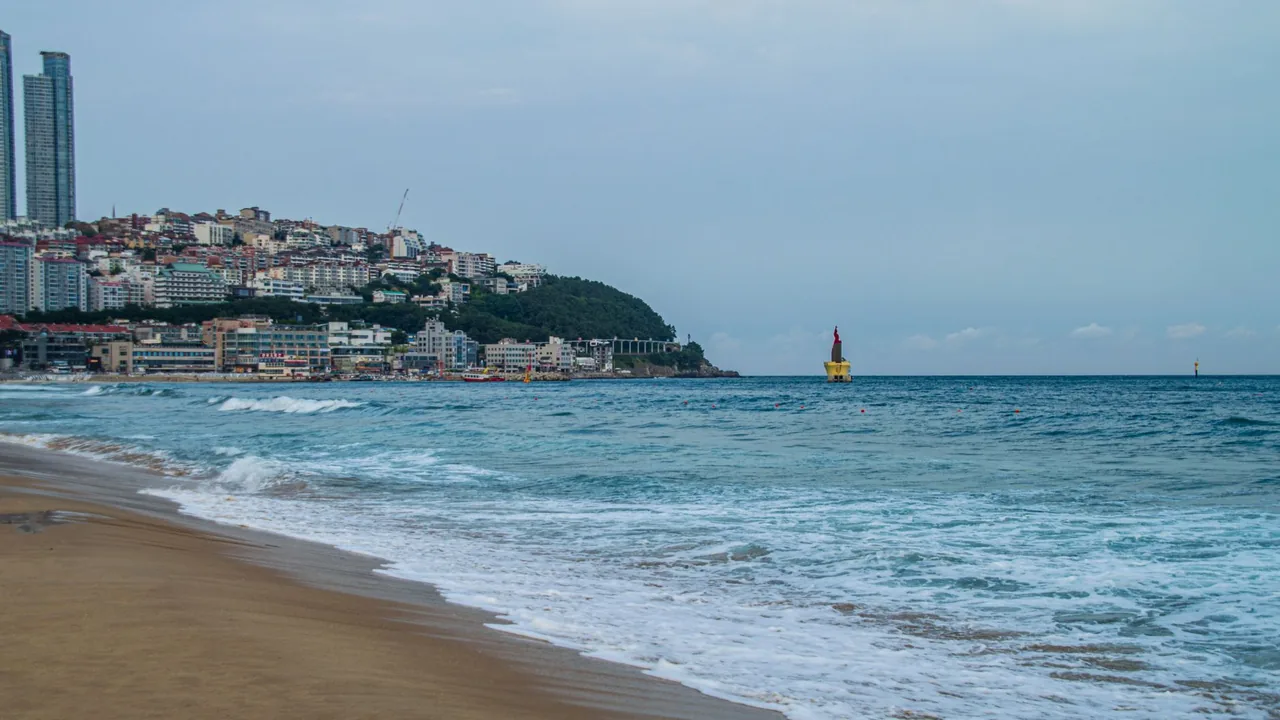
Start at Haeundae Beach (해운대해수욕장) at 8 a.m. before the crowds. Walk the shoreline, grab coffee at one of the seaside cafés, and get oriented with the water views. If you're here June–August, don't swim; the currents are treacherous and beaches close by early afternoon.
Head to Shinsegae Centum City (신세계 센텀시티), the world's largest department store by floor area. You don't need to shop—just ride the escalators to the upper floors. The views of the busan skyline city center sprawling south toward the harbor are the best free photo op in the city. Budget 45 minutes.
Cost: Free. Coffee ₩4,500–6,000.
Take the subway (Line 2) to Millak Station and exit toward Millak-ro (밀락로), a narrow alley packed with family-run restaurants. This is where locals eat, not tourists. Head to Hwang's Kalguksu (황칼국수, around ₩9,000 for a massive bowl of knife-cut noodles in anchovy broth) or grab nakji-bokkeum (stir-fried octopus, ₩12,000–15,000) at any stall. The energy here is real—ajummas (older Korean women) yelling orders, steam rising, the smell of sesame oil and grilled squid.
Head to Busan Tower (부산타워) in Yongdusan Park. The 120m observation deck costs ₩8,000 and gives you 360-degree views of the busan skyline city center, port cranes, and the Nakdong River delta. Go between 3–5 p.m. to catch the light shift from afternoon gold to evening blue. The park itself has walking trails, so spend 2 hours total.
Stay until dusk. The city lights turn on around 6:30 p.m. in late May; earlier in winter.
Cost: Tower ₩8,000. Park entry free.
Walk downhill from Yongdusan to Nampo-dong (남포동), Busan's old downtown. It's faded, chaotic, and nothing like the gleaming malls—which is exactly why you should see it. Browse the stalls at BIFF Square (부산국제영화제광장), named after the Busan International Film Festival held here every October. Street vendors sell hotteok (sweet pancakes, ₩3,000) and grilled corn.
For dinner, eat at Songdo Raw Fish Town (송도해변마을) if you're confident about raw fish—otherwise grab jjamppong (spicy seafood soup, ₩12,000–18,000) at any pojangmacha (tent bar/restaurant) along the street. The energy is rowdy, the prices are low, and the clientele is mixed tourists and working Busan folks.
Cost: Hotteok ₩3,000. Dinner ₩12,000–20,000.
---
Day 2: Neighborhoods & Local Rhythm
Yes, it's touristy, but arrive at Gamcheon Culture Village (감천문화마을) by 8:30 a.m., before the bus tours arrive. The village is genuinely beautiful—stacked houses painted in pastel blues, yellows, and greens clinging to a hillside. The story: it was built as a settlement for war refugees in the 1950s; now artists and cafés occupy the lower sections while elderly residents still live in upper houses.
Wander the upper alleys where tourists don't penetrate. Bring coins for the small art installations. Budget 90 minutes, then leave by 10 a.m.
Cost: Free entry. Coffee at local cafés ₩4,500–6,000.
Head to Seomyeon (서면) station on Line 1. This is Busan's youth center—K-pop stores, cosmetics shops, PC bangs (internet cafés), and street fashion. Walk Bujeon Food Street (부전먹거리골목) for lunch. It's a narrow pedestrian alley with 30+ restaurants specializing in tteokbokki (spicy rice cakes) and gimbap (kimbap rolls). Grab a stool, order ₩5,000–8,000 worth of food, and eat standing up alongside students and office workers.
This is where Busan's Gen Z hangs out—very different energy from Day 1's harbor area.
Cost: Lunch ₩6,000–10,000.
Hike down from Gamcheon to Gaemi-Jjim Alley (개미찜 골목), a steep street famous for gaemi-jjim (small-portion stir-fries cooked in individual pots). It's gritty, authentic, and only open from lunch to early evening. Order ₩8,000–12,000 worth of side dishes to share; it's a local institution, not a tourist attraction.
Cost: ₩8,000–15,000 per person.
Take the subway to Choryang Station and walk to Songsan-dong (송산동), a hillside neighborhood filled with vintage and indie cafés. Stop at Cozy Corner or any small coffee shop (₩4,500–6,000) and watch the city shift into evening. The café culture here is serious—think third-wave coffee, not mall chains.
Cost: Coffee ₩4,500–6,000.
---
Day 3: Coastal & Industrial Busan
Head to Taejongdae (태종대), a clifftop park on Busan's southern coast. Take the subway to Namodae Station, then a taxi (₩15,000–18,000). The park entrance is free; a small train (₩3,000) circles the cliff. Walk the coastal paths for raw views of the sea, fishing boats, and the Japanese island of Tsushima in the distance on clear days.
Nearby Dadaepo Beach (다대포해수욕장) is quieter and less developed than Haeundae. Grab fresh sashimi at the beachfront stalls (₩15,000–25,000 per portion).
Cost: Park free. Train ₩3,000. Taxi ₩15,000–18,000. Sashimi ₩15,000–25,000.
Don't just walk through Jagalchi Market (자갈치시장)—sit down. Go to the second floor, find a restaurant, and order a sashimi platter (₩20,000–40,000 per person). Watch fishmongers gut live fish below. It's raw and real. Ask the restaurant staff to source from stalls below if you want to support small vendors directly.
Cost: Sashimi lunch ₩25,000–45,000.
If you have energy, take a taxi to Beomeosa Temple (범어사) in the mountains northeast of the city. It's a working Buddhist temple, not a tourist site. The walk from the entrance takes 30 minutes uphill; the temple sits in quiet forest. Visitors are welcome—just be respectful of monks and removal of shoes in certain areas.
Alternatively, explore Yongho-dong (용호동), a residential neighborhood with small bars, restaurants, and zero tourists. Wander, eat street food, and experience Busan as locals do.
Cost: Taxi ₩20,000–30,000 to temple. Temple entry free.
Return to central Busan. Take the subway to Nampo Station and walk to Nampo Waterfront Park (남포수변공원). As darkness falls, the busan skyline city center erupts. Tall buildings light up—the Lotte World Tower, Shinsegae, the port area glittering. Grab tteokbokki and beer from a street vendor (₩15,000–20,000 for two), find a bench, and watch the skyline for 30 minutes. This is the money shot.
Final dinner: Gwangbok-ro Food Street (광복로먹거리골목), famous for dwaeji-galbijjim (braised pork short ribs, ₩15,000–20,000).
Cost: Street snacks + beer ₩15,000–20,000. Dinner ₩15,000–25,000.
---
Specific Neighborhoods & Spots Summary
| Neighborhood | Why Go | Best For | Budget | |---|---|---|---| | Haeundae | Beach, Shinsegae views | Skyline photos, morning walks | Free–₩6,000 | | Nampo-dong | Historic downtown, harbor | Street food, old Busan energy | ₩5,000–20,000 | | Gamcheon Culture Village | Colorful hillside houses | Instagram, art, early morning | Free–₩6,000 | | Seomyeon | Youth culture, K-pop | Shopping, street food, cafés | ₩5,000–15,000 | | Songsan-dong | Indie cafés, vintage shops | Coffee, evening chill | ₩4,500–6,000 | | Jagalchi Market | Fresh seafood hub | Sashimi lunch, market energy | ₩20,000–40,000 | | Taejongdae | Coastal cliffs, fishing boats | Views, quiet walks, sashimi | ₩15,000–25,000 |
---
Etiquette & Practical Tips
- Subway Card is Essential. Buy a rechargeable card (₩2,500) at any GS25 or CU convenience store. Single ride is ₩1,250–2,500. Keep ₩30,000–50,000 on it to avoid lines.
- Cash Still Rules in Alleys. Major stores and cafés take cards, but old food streets and pojangmachas (tent restaurants) are cash-only. ATMs are everywhere, but expect ₩1,000–2,500 withdrawal fees at non-bank ATMs.
- Eat Where Ajummas Gather. If a restaurant is full of older Korean women, it's cheap and good. Avoid tourist-facing menus with English and photos. Point and gesture or use Naver Papago app to translate.
- Respect Temple Etiquette. Remove shoes before entering temple buildings. Don't point cameras at monks. Photography is often restricted in certain areas—ask first.
- Weather Changes Fast. Busan's sea breeze is strong and unpredictable. Bring a light jacket even in late May. Typhoon season starts in June; check forecasts before traveling.
- Taxis are Cheap but Unmetered. Negotiate fares with taxi drivers beforehand for longer trips (e.g., to temples or Taejongdae). A 20-minute ride in the city is ₩10,000–15,000. Uber alternative: use Kakao Taxi app.
- Don't Tip. Tipping is not expected or customary in Korea. Rounding up at cafés is appreciated but not necessary.
- Subway Etiquette Matters. Priority seating (near doors) is for elderly, pregnant women, and small children—don't sit there. Eating on subways is discouraged. Loud phone calls are taboo.
- Peak Hours are Real. Avoid subways 7–9 a.m. and 5–7 p.m. Walking is often faster and more pleasant during these times.
- Download Naver Map & Papago. Google Maps and Translate have poor coverage in Korea. Naver Map (with street-level navigation) and Papago (translation app) are essential free tools.
---
FAQ
Spring (April–May) and fall (September–October) are ideal. Summer (June–August) is hot, humid, and crowded with tourists; beaches can be closed due to dangerous currents. Winter (November–March) is cold and gray, though less touristy. Weather is most stable in late April and early October.
Yes, book 2–3 weeks ahead, especially May–October. Busan fills quickly during weekends and holidays. Mid-range hotels (₩80,000–150,000/night) are abundant in Haeundae and Nampo-dong; hostels (₩30,000–50,000) cluster near Gamcheon and Seomyeon. Airbnb is reliable but often pricier than hotels.
Yes, very safe. Busan is one of Korea's safest cities. Well-lit main streets and subway stations are busy until midnight. Avoid isolated alleys past 2 a.m. Women should exercise standard urban precautions, but violent crime against tourists is extremely rare.
Subway and walking. A single subway ride is ₩1,250–2,500; buy a rechargeable card to avoid repeated purchases. Buses are cheaper (₩1,250–2,100) but less tourist-friendly (no English announcements). Taxis start at ₩3,800 but are pricey for repeated use. Walking neighborhoods like Gamcheon, Seomyeon, and Nampo-dong takes no longer than subways when you factor in wait times.
It's harder than Seoul, but possible. Buddhist temples like Beomeosa serve temple food (bap, ₩10,000–15,000). Seomyeon has dedicated vegetarian cafés. Most restaurants have vegetable side dishes (banchan); ask for "no meat" ("고기 없이 주세요"). Convenience stores (GS25, CU, Emart24) stock instant ramen, gimbap, and kimbap—not ideal but functional.
The busan skyline city center at dusk from the waterfront, fresh sashimi lunch at Jagalchi or a beach stall, and at least one meal at a local pojangmacha. Skip overcrowded Gamcheon if time is limited; Taejongdae's coastal views are worth the taxi fare more than colorful houses. And eat at Millak-ro or Bujeon Food Street—chain restaurants and tourist traps won't give you the real Busan.
---
Ready for Busan?
This itinerary prioritizes authentic neighborhoods, working-class food culture, and the stunning busan skyline city center—not Instagram checkboxes. You'll return home with stories of alleys, sashimi, and locals, not just photos from crowded viewpoints.
Ask the KORLENS AI chat for Busan place suggestions for a first visit based on your interests. It is an AI assistant that replies in seconds, not a human team, and it works from Korea Tourism Organization open data. Also visiting Seoul? Seoul Local Picks covers Seoul only.
Next Step
About this guide
KORLENS is run by one person (KunStudio, a solo studio in Korea), not an editorial team. Guides are AI drafts based on public sources; some use Korea Tourism Organization TourAPI open data. KORLENS does not claim on-site visits or scheduled re-checks, so confirm hours, prices and closures with the venue before you go. Page last edited: 2026-05-22.
Plan your Korea trip with the KORLENS AI chat
Got a follow-up question after reading this? Ask the KORLENS AI chat in plain English. It is an AI assistant, not a person, and it replies in seconds with places from Korea Tourism Organization open data.
Ask the KORLENS AI chatCurious about Korean Saju? Try sajuapp.app
1,000-year-old Korean astrology, decoded by AI — available in 9 languages.
Is it worth visiting, the best time to go, crowds and real cost.
Best time to visit Busan, month by month →Busan's Hidden Coffee Shops Locals Love (2026 Guide for Foreigners)
Skip the tourist traps. Discover Busan's authentic third-wave coffee culture where locals actually spend their mornings—hidden gems with jaw-dropping interiors
Seoul Night Markets and Late-Night Eats (2026 Guide)
Skip the touristy daytime markets. Seoul's real food culture lives after midnight at neighborhood pojangmacha tents and underground food courts where locals que